
📍 Puerto Vallarta Gay Nightlife History: At a Glance
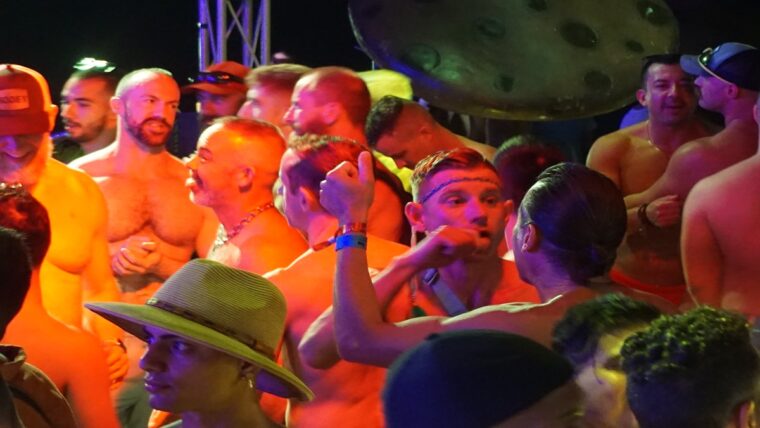
Table of Contents
- 1 📍 Puerto Vallarta Gay Nightlife History: At a Glance
- 2 Why Puerto Vallarta Became an LGBTQ+ Destination
- 3 The Night of the Iguana and Puerto Vallarta’s Global Discovery
- 4 Hollywood, Privacy, and the Rise of an Isolated Coastal Escape
- 5 Why LGBTQ+ Travelers Felt Comfortable in Puerto Vallarta
- 6 West Coast Expat Influence and Early Gay Tourism
- 7 How Geography and Tourism Shaped Zona Romántica
- 8 The First Gay Bars in Puerto Vallarta (1980s–1990s)
- 9 Why Zona Romántica Became the Center of Gay Nightlife
- 10 The Rise of Drag and Cabaret Entertainment
- 11 Circuit Parties and the Evolution of Puerto Vallarta Nightlife
- 12 Club Mañana and the Era of Spectacle
- 13 How LGBTQ+ Nightlife Transformed Puerto Vallarta Tourism
- 14 Shift to Beach Clubs & Daylife (Mantamar, Blue Chairs Transition)
- 15 Pride and global visibility expansion
- 16 Post-COVID luxury tourism transformation
- 17 Public Recognition of LGBTQ+ Tourism’s Economic Impact
- 18 Modern Distributed Nightlife Ecosystem (Industry, Cabaret, Bars)
- 19 Influential Puerto Vallarta Gay Bars That have Closed
- 20 Living Legends: Puerto Vallarta Gay Bars Still Making History
- 21 How did LGBTQ+ Nightlife Transform Puerto Vallarta Tourism FAQ?
- 21.1 Why is the cabaret scene in Puerto Vallarta more successful than in other beach destinations?
- 21.2 How do repeat visitors impact the economic sustainability of PV cabaret?
- 21.3 Why do international entertainers choose to make Puerto Vallarta their primary residency?
- 21.4 Why did Puerto Vallarta become Mexico’s leading LGBTQ+ beach destination?
- 21.5 When did Puerto Vallarta first become popular with LGBTQ+ travelers?
- 21.6 Why did Zona Romántica become the center of Puerto Vallarta LGBTQ+ nightlife?
- 21.7 What were the first major gay bars in Puerto Vallarta?
- 21.8 How did early expatriates influence LGBTQ+ tourism in Puerto Vallarta?
- 21.9 How did cabaret and drag entertainment shape Puerto Vallarta nightlife?
- 21.10 What was Latin Fever and why was it important to Puerto Vallarta nightlife?
- 21.11 Why was Club Mañana important in Puerto Vallarta LGBTQ+ history?
- 21.12 Why did the mega-club era decline in Puerto Vallarta?
- 21.13 How did Mantamar change LGBTQ+ tourism in Puerto Vallarta?
- 21.14 Why is Puerto Vallarta nightlife so walkable?
- 21.15 Why does Puerto Vallarta have a decentralized nightlife scene?
- 21.16 How did LGBTQ+ tourism reshape real estate in Zona Romántica?
- 21.17 How did Vallarta Pride increase Puerto Vallarta’s international visibility?
- 21.18 Why is Vallarta Pride held in May instead of June?
- 21.19 Why does Puerto Vallarta remain one of the world’s top LGBTQ+ travel destinations?
Puerto Vallarta did not become the “Gay Capital of Mexico” by accident. It was forged through a unique intersection of dense tropical geography, visionary local entrepreneurs like Paco Ruiz, and the high-production “Mega-Club” era of the early 2000s. From the intimate, rebellious social circles of Los Balcones in the 1980s to the world-class cabaret culture defined by Mark Rome, this is the definitive record of the people, the venues, and the cultural shifts that transformed the Zona Romántica into a global entertainment powerhouse.
Long before Puerto Vallarta became one of the world’s leading LGBTQ+ travel destinations, the city’s nightlife operated quietly through a handful of local bars serving a small but resilient community.
In the early 1980s, pioneering venues like Los Balcones helped establish the first visible gay social spaces in Puerto Vallarta, laying the foundation for what would eventually become an internationally connected entertainment ecosystem centered around the Zona Romántica.
Throughout the 1990s and early 2000s, Puerto Vallarta gay nightlife expanded rapidly as drag entertainment, cabaret productions, dance clubs, and international tourism transformed the city into a destination increasingly recognized beyond Mexico. Landmark venues such as Paco Paco, Paco’s Ranch, Club Mañana, and The Palm Cabaret helped define different eras of nightlife culture while shaping the identity of Puerto Vallarta itself.
The city’s rise onto the global circuit party map accelerated with the arrival of Latin Fever and later White Party Puerto Vallarta, drawing international DJs, promoters, performers, and visitors from across North America and Europe. These events permanently changed the scale, economics, and visibility of LGBTQ+ tourism in the destination.
At the same time, rivalries between venues, changing nightlife trends, and the collapse of major clubs forced the community to continuously reinvent itself.
Today, Puerto Vallarta’s LGBTQ+ nightlife extends far beyond bars and clubs alone. The modern ecosystem includes beach clubs, drag theaters, circuit festivals, after-hours venues, Pride celebrations, cabaret productions, nightlife tourism businesses, and an interconnected hospitality industry that supports hundreds of thousands of LGBTQ+ visitors each year.
This historical guide documents the evolution of Puerto Vallarta gay nightlife from its earliest foundations in the 1980s through the modern global era. Along the way, it explores the venues, personalities, events, neighborhoods, and turning points that helped shape one of the most influential LGBTQ+ nightlife destinations in the world.
📖 Quick Navigation: History Chapters Of Puerto Vallarta Gay Nightlife
Why Puerto Vallarta Became an LGBTQ+ Destination
Before Puerto Vallarta developed internationally known gay bars, drag entertainment, beach clubs, and nightlife districts, the city first evolved into something far more important: a place where LGBTQ+ travelers quietly felt comfortable.
Unlike many destinations that built tourism around nightlife first, Puerto Vallarta’s LGBTQ+ identity emerged from a combination of geography, privacy, Hollywood influence, artistic culture, expatriate migration, and the city’s unusually tolerant social environment. Long before the first dedicated gay venues appeared in the 1980s, Puerto Vallarta had already developed a reputation as a coastal refuge where visitors could exist with greater freedom and less scrutiny than in many parts of North America.
This foundation ultimately shaped the rise of the city’s modern LGBTQ+ nightlife industry and transformed Puerto Vallarta into one of the world’s most recognized LGBTQ+ tourism destinations.
The Night of the Iguana and Puerto Vallarta’s Global Discovery
Puerto Vallarta’s international profile changed dramatically during the filming of The Night of the Iguana in 1963. Directed by John Huston and starring Richard Burton, Elizabeth Taylor, and Ava Gardner, the production brought global media attention to what was then a relatively isolated fishing village on Mexico’s Pacific coast.
At the time, Puerto Vallarta had limited road access, minimal tourism infrastructure, and little international exposure. Yet that isolation became part of its appeal. The production’s arrival exposed Hollywood elites, artists, and wealthy travelers to a destination that offered extraordinary natural beauty combined with distance from the constant scrutiny of Los Angeles, New York, and the entertainment press.
The highly publicized relationship between Richard Burton and Elizabeth Taylor generated enormous international coverage, but equally important was the behind-the-scenes migration of creative professionals, stylists, producers, artists, and entertainment figures who discovered Puerto Vallarta during this period. Many visitors recognized the city as a place where social conventions felt less rigid and privacy was easier to maintain.
The film did not create LGBTQ+ tourism directly. Instead, it introduced Puerto Vallarta to international travelers who were seeking escape, discretion, and a more relaxed social environment — conditions that later became essential to the city’s LGBTQ+ appeal.
Hollywood, Privacy, and the Rise of an Isolated Coastal Escape
During the 1960s and 1970s, Puerto Vallarta remained relatively remote compared to major Mexican resort destinations. Before large-scale tourism expansion, reaching the city often required significant travel effort, which unintentionally filtered visitors toward artists, expatriates, adventurers, and affluent travelers seeking something less commercialized.
This isolation mattered historically.
Many LGBTQ+ travelers during this era lived within social systems where visibility carried serious professional and personal risks. Public acceptance was limited across much of North America, and openly gay nightlife districts were still developing in cities such as San Francisco, Los Angeles, and New York.
Puerto Vallarta offered something different: anonymity without complete invisibility.
Visitors could socialize more freely, spend time on beaches, form social circles, and interact with other travelers in ways that felt less policed than in many American cities at the time. The city’s small size, relaxed pace, and tourism-driven economy created an environment where visitors were often treated more as tourists than as social identities to be scrutinized.
This distinction became foundational to Puerto Vallarta’s early LGBTQ+ tourism growth.
Why LGBTQ+ Travelers Felt Comfortable in Puerto Vallarta
Puerto Vallarta’s rise as an LGBTQ+ destination was never based on a single moment or marketing campaign. Instead, comfort developed gradually through lived visitor experiences and word-of-mouth travel networks.
Several conditions contributed to that sense of comfort:
- A tourism economy dependent on foreign visitors rather than rigid social conservatism
- A coastal culture shaped by hospitality and service industries
- Strong artistic and expatriate communities
- A walkable urban environment that encouraged public social interaction
- Lower levels of visible hostility compared to many destinations during the 1970s and 1980s
Importantly, Puerto Vallarta evolved before the era of social media and corporate destination branding. Early LGBTQ+ tourism spread through personal recommendations, travel networks, private guides, and returning seasonal visitors.
Travelers who felt accepted often returned repeatedly, purchased property, opened businesses, or encouraged friends to visit. Over time, these repeat visitation patterns slowly created the social infrastructure that later supported dedicated gay guesthouses, bars, restaurants, and entertainment venues.
The city’s reputation expanded organically long before official tourism campaigns began targeting LGBTQ+ travelers directly.
West Coast Expat Influence and Early Gay Tourism
Puerto Vallarta’s geographic position on Mexico’s Pacific coast also shaped its early tourism demographics. Direct connections and travel routes from California and the western United States helped attract expatriates and seasonal visitors from cities where LGBTQ+ communities were already becoming more visible.
By the 1970s and early 1980s, many visitors arriving from San Francisco, Los Angeles, Seattle, and Vancouver brought with them evolving ideas about nightlife, hospitality, arts culture, and social openness.
Some became permanent or semi-permanent residents.
This expatriate influence helped establish:
- Small guesthouses and boutique hotels
- Social gathering spaces
- Beach-oriented tourism culture
- Informal LGBTQ+ social networks
- Early nightlife experimentation
These communities played a major role in transforming Puerto Vallarta from a tolerant destination into an identifiable LGBTQ+ tourism market. That informal ecosystem eventually laid the groundwork for the nightlife expansion that accelerated during the 1980s and 1990s.
Puerto Vallarta LGBTQ+ Nightlife Evolution At A Glance
| Era | Nightlife Evolution | Tourism Impact |
|---|---|---|
| 1970s–1980s | Informal social networks, early bars, cabaret culture, and expatriate-driven gathering spaces began shaping Puerto Vallarta’s LGBTQ+ identity. | Established the city’s first repeat LGBTQ+ tourism patterns and seasonal visitor communities. |
| 1980s–1990s | Cabaret entertainment, drag performance culture, and walkable nightlife districts expanded across Zona Romántica. | Helped transform Puerto Vallarta into an identifiable LGBTQ+ tourism destination in North America. |
| Late 1990s–2000s | Circuit tourism, destination-event weekends, international DJs, and large-scale nightlife promotions accelerated global visibility. | Positioned Puerto Vallarta within the international LGBTQ+ nightlife and event tourism economy. |
| 2000s Mega-Club Era | Large venues such as Club Mañana centralized nightlife activity through spectacle-driven entertainment and high-capacity tourism events. | Increased international tourism demand while reshaping nightlife into a major economic driver. |
| 2010s Beach Club Expansion | Beach clubs, pool parties, and daytime entertainment transformed LGBTQ+ tourism into a day-to-night social ecosystem. | Expanded luxury tourism, social media visibility, and hospitality integration. |
| Pride & Global Branding Era | Vallarta Pride and international media exposure elevated Puerto Vallarta into a globally recognized LGBTQ+ destination brand. | Strengthened year-round tourism demand and international destination awareness. |
| Modern Distributed Nightlife Era | A network of bars, cabaret venues, beach clubs, rooftops, and entertainment spaces replaced centralized nightlife dominance. | Created a more resilient, diversified, and experience-driven LGBTQ+ tourism economy. |
How Geography and Tourism Shaped Zona Romántica
Puerto Vallarta’s physical geography played a direct role in shaping what would eventually become the center of the city’s LGBTQ+ nightlife district.
The area now known as Zona Romántica developed differently from newer resort corridors because of its dense street grid, mixed residential-commercial layout, and highly walkable structure. Unlike isolated hotel zones built primarily for large-scale tourism, Zona Romántica encouraged street-level interaction between locals, expatriates, tourists, restaurants, cafés, bars, galleries, and nightlife.
Its proximity to Los Muertos Beach also became historically important. Beach culture helped normalize public gathering spaces where international visitors mixed openly, creating an atmosphere that felt socially accessible and less formal than traditional resort environments.
As LGBTQ+ tourism expanded during the 1980s and 1990s, many businesses naturally concentrated in this part of the city because:
-
The neighborhood was already highly walkable
-
Commercial spaces were smaller and independently operated
-
Tourism density was increasing
-
Expat communities were already present
-
Visitors preferred centralized social districts
This concentration effect eventually transformed Zona Romántica into the historic center of Puerto Vallarta’s gay nightlife industry — a role it continues to hold today.
The First Gay Bars in Puerto Vallarta (1980s–1990s)
The underground foundation era of Puerto Vallarta gay nightlife began when pioneering venues like Los Balcones, Paco Paco, and Los Amigos established the city’s first visible LGBTQ+ social spaces and helped shape the early culture of Zona Romántica.
By the early 1980s, Puerto Vallarta gay nightlife was no longer based solely on discretion, beaches, or expatriate social circles. A visible LGBTQ+ nightlife culture was beginning to emerge. The city still lacked the scale and commercial infrastructure of larger North American gay districts, but that limitation became part of its identity. Early gay nightlife developed through small independent venues, word-of-mouth networks, and grassroots community building rather than corporate models.
This era established the cultural DNA that would later define the region:
-
Walkable nightlife districts
-
Beach-to-bar culture
-
Mixed local and international communities
-
Late-night socializing
-
Performance-driven entertainment
-
An unusually social atmosphere centered around repeat visitors
Most importantly, these early venues were not built exclusively for tourists. Local Mexican LGBTQ+ culture played a major role in shaping the atmosphere, identity, and evolution of the scene.
Los Balcones and the First Visible Gay Social Spaces
Among the earliest recognizable spaces was Los Balcones, which established the idea that LGBTQ+ nightlife could exist publicly — even if cautiously — within the city.
During the early 1980s, openly gay venues still carried significant social risk. However, Puerto Vallarta’s tourism economy and growing expatriate communities created more social flexibility than many other destinations. Los Balcones became part of that transition. Rather than a massive nightclub, it operated as an intimate social environment where friendships and recurring visitor networks formed organically.
For many, it represented the ability to gather socially with reduced fear of harassment. That visibility helped normalize the LGBTQ+ presence long before large-scale Pride events or international marketing campaigns existed.
Paco Paco and the Early Dance Scene
As nightlife expanded during the late 80s and early 90s, Paco Paco became a defining venue. Established by the legendary Paco Ruiz, it helped transform Puerto Vallarta from a quiet social destination into a recognizable nightlife city.
The venue established several now-central patterns:
-
Late-night dance culture
-
Highly social bar-to-club movement
-
Mixed tourist and local crowds
-
Performance-oriented entertainment
-
Nightlife built around personality over corporate branding
For many travelers, Paco Paco was symbolic of the transition from hidden social circles toward a more confident and visible nightlife community.
Los Amigos and Local Mexican LGBTQ+ Culture
While international tourism played a major role, local Mexican LGBTQ+ culture remained the heartbeat of the city’s identity. Los Amigos represented a more locally oriented social environment, ensuring the scene did not evolve exclusively around foreign tourism.
Local patrons, performers, and entrepreneurs helped shape:
-
Music preferences and nightlife traditions
-
Social customs and entertainment styles
-
The highly interactive atmosphere
These smaller venues functioned as informal community spaces. Support systems and romantic relationships often formed inside these bars because few other open LGBTQ+ public spaces existed. This grassroots structure remains a defining characteristic of the culture today.
Why Zona Romántica Became the Center of Gay Nightlife
By the 1990s, Puerto Vallarta’s gay nightlife scene had become increasingly concentrated in Zona Romántica, establishing the district as the historic center of LGBTQ+ social life in the city.
Several conditions accelerated this concentration.
The neighborhood’s compact street layout encouraged walking between bars, restaurants, cafés, beach areas, and late-night venues. Small storefronts and mixed-use buildings also made it easier for independent operators to open nightlife businesses without the massive investment required in larger resort districts.
Costs mattered as well.
Compared to major U.S. cities during the 1980s and early 1990s, commercial rents and operating costs in Puerto Vallarta remained relatively accessible. This allowed smaller independent nightlife venues to experiment with nightlife concepts that might have been financially impossible in Los Angeles, San Francisco, or New York.
The area’s proximity to Los Muertos Beach further strengthened the district’s nightlife identity. Visitors naturally moved between beaches, restaurants, bars, and dance venues within a highly walkable environment that encouraged spontaneous social interaction.
Over time, this created a self-reinforcing nightlife ecosystem:
-
New venues opened near existing ones
-
Returning tourists stayed nearby
-
Local LGBTQ+ communities gathered there
-
And nightlife visibility continued to increase
By the end of the 1990s, the foundation had been established for the major nightlife expansion that would transform Puerto Vallarta into an internationally recognized gay nightlife district during the 2000s.
The Rise of Drag and Cabaret Entertainment
The diversification era of Puerto Vallarta nightlife, when drag entertainment, cabaret productions, and live performance venues such as The Palm Cabaret expanded LGBTQ+ tourism beyond dance clubs and helped establish Puerto Vallarta as a global entertainment destination.
The enduring success of Puerto Vallarta’s cabaret scene—a market anomaly compared to other global beach destinations—is rooted in a unique demographic and consumption model. According to founder Mark Rome, the industry’s stability is built on a ‘progressive crossover’ audience, where approximately 50% of attendees identify as straight. This massive cross-community appeal, combined with a high-frequency visitation pattern where tourists commonly attend 4 to 5 different shows within a single two-week stay, has transformed cabaret from a niche activity into the city’s primary evening economic driver. This dense market of engaged, repeat viewers is precisely what attracts world-class international performers to establish year-round residencies, supported by a professional infrastructure of specialized lighting and stage design that rivals major metropolitan theaters.
As Puerto Vallarta gay nightlife expanded during the late 1990s and early 2000s, the city began evolving beyond dance clubs, cruising culture, and late-night bars alone. A new entertainment model was emerging — one centered around live performance, personality-driven productions, drag entertainment, comedy, music, and theatrical nightlife experiences.
This transformation permanently changed the structure of LGBTQ+ tourism in Puerto Vallarta.
For the first time, nightlife increasingly appealed not only to younger club audiences, but also to couples, older travelers, long-stay seasonal visitors, mixed social groups, and tourists seeking full-evening entertainment experiences rather than exclusively late-night partying.
Cabaret and drag entertainment helped diversify Puerto Vallarta’s tourism economy while establishing the city as something larger than a party destination alone. It was becoming an LGBTQ+ entertainment destination.
Mark Rome and the Creation of The Palm Cabaret
One of the most influential figures in this transformation was Mark Rome, whose work with The Palm Cabaret helped redefine what nightlife entertainment in Puerto Vallarta could become.
When The Palm emerged as a major venue, it was not viewed solely as a traditional cabaret theater. Instead, it represented a broader expansion of entertainment culture within Puerto Vallarta’s LGBTQ+ tourism industry.
The venue helped normalize:
-
Scheduled evening entertainment
-
Seated performance experiences
-
Live vocal performances
-
Comedy and theatrical productions
-
Drag-centered entertainment
-
And personality-driven nightlife programming
This marked an important shift in the evolution of Puerto Vallarta nightlife. Before this era, much of the city’s entertainment culture revolved around bars, dance floors, and late-night socializing. The rise of cabaret introduced the idea that nightlife could begin earlier, last longer, and revolve around performance experiences rather than club environments alone. That evolution dramatically expanded the audience for Puerto Vallarta nightlife.
How Drag and Cabaret Expanded LGBTQ+ Tourism
The growth of drag entertainment and cabaret culture helped diversify the demographics of LGBTQ+ tourism in Puerto Vallarta. Visitors who may not have been interested in dance clubs or circuit-style nightlife now found entertainment experiences centered around music, comedy, live theater, audience interaction, and recurring performers.
This helped attract:
-
Couples
-
Older LGBTQ+ travelers
-
Women travelers
-
Mixed-orientation social groups
-
Long-stay winter residents
-
And repeat seasonal visitors
Cabaret also encouraged tourists to organize evenings differently. Rather than nightlife beginning exclusively after midnight, many visitors now planned evenings around dinner reservations, live shows, cocktails, and multiple entertainment stops throughout the night. This created a more layered and economically diverse nightlife ecosystem that benefited restaurants, bars, theaters, hotels, and surrounding businesses throughout Zona Romántica.
The expansion of cabaret culture also increased the visibility of performers themselves, helping create recognizable entertainment personalities closely associated with Puerto Vallarta tourism.
Kim Kuzma, Amy Armstrong, and the Growth of Cabaret Culture
As cabaret entertainment expanded, performers increasingly became part of Puerto Vallarta’s tourism identity. Artists such as Kim Kuzma and Amy Armstrong helped establish the city’s reputation for live LGBTQ+ entertainment that extended far beyond traditional nightclub culture.
Their popularity reflected a broader transformation occurring within Puerto Vallarta nightlife:
-
Audiences were becoming more diverse
-
Entertainment was becoming more professionally produced
-
And visitors increasingly expected high-quality live performances alongside nightlife experiences
This period also helped strengthen Puerto Vallarta’s identity as a destination where entertainment operated throughout the entire evening rather than only during late-night club hours. Seasonal performance schedules, recurring weekly productions, and returning entertainers encouraged repeat visitation patterns and helped create a more stable entertainment economy tied to tourism seasons.
Why Cabaret Changed Puerto Vallarta Nightlife Forever
The rise of cabaret fundamentally altered the long-term trajectory of Puerto Vallarta nightlife. Dance clubs and bars remained essential to the city’s identity, but cabaret introduced something more sustainable and flexible: entertainment that could appeal across generations, travel styles, and nightlife preferences.
This diversification became one of Puerto Vallarta’s greatest tourism advantages. Unlike destinations dependent primarily on youth-oriented club culture, Puerto Vallarta developed a broader entertainment ecosystem capable of attracting:
-
Nightlife tourists
-
Retirees
-
Couples
-
Cultural travelers
-
Seasonal residents
-
And visitors seeking both relaxation and entertainment
Cabaret also helped elevate the professionalism of nightlife itself. Productions became more organized, performers developed loyal followings, and entertainment calendars became increasingly important to tourism marketing and repeat visitation.
By the early 2000s, drag and cabaret entertainment had become fully integrated into the identity of Puerto Vallarta LGBTQ+ nightlife — helping transform the city from a nightlife district into one of the world’s most recognized LGBTQ+ entertainment destinations.
Circuit Parties and the Evolution of Puerto Vallarta Nightlife
By the late 2000s, Puerto Vallarta’s LGBTQ+ nightlife industry had evolved far beyond the intimate bar culture that originally defined the city during the 1980s and early 1990s. What emerged instead was one of the most significant turning points in the history of LGBTQ+ tourism in Mexico: the rise of destination-event nightlife.
For the first time, visitors were no longer traveling to Puerto Vallarta simply for beaches, nightlife, or winter vacations alone. Increasingly, travelers were organizing entire trips around specific weekends, DJs, branded events, and circuit-party calendars. Tourism behavior itself was changing.
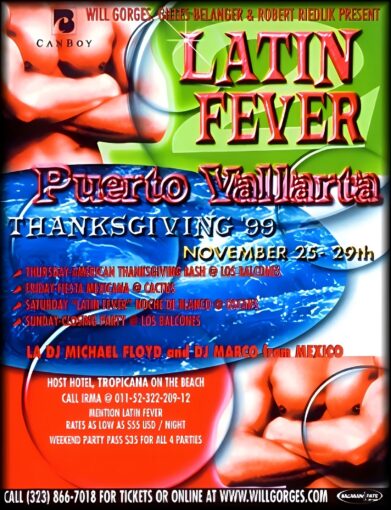
At the center of this transformation was Latin Fever, founded by legendary promoter Will Gorges. Launching in 1999 during Thanksgiving weekend, Latin Fever introduced Puerto Vallarta to the large-scale circuit tourism model already developing in cities such as Los Angeles, Miami, Palm Springs, and Montreal. Gorges brought established West Coast circuit audiences, performers, DJs, and nightlife culture directly into Puerto Vallarta at a moment when the city was beginning to gain broader international visibility.
Unlike traditional one-night club promotions, Latin Fever operated as a coordinated multi-day destination experience utilizing multiple venues, nightlife events, daytime gatherings, and social programming across the city. The event later expanded into New Year’s celebrations and additional major tourism weekends, helping establish the idea that Puerto Vallarta itself could function as a branded LGBTQ+ event destination rather than simply a beach town with gay nightlife.
The impact was immediate and long-lasting. Puerto Vallarta’s circuit era also fundamentally changed tourism behavior itself.
Earlier generations of LGBTQ+ travelers often visited Puerto Vallarta for longer beach vacations centered around bars, restaurants, cabaret entertainment, and seasonal social life. The rise of circuit tourism introduced a different travel pattern built around highly concentrated event weekends, VIP nightlife experiences, coordinated travel groups, and destination-driven entertainment calendars.
For the first time, many visitors were no longer traveling primarily for Puerto Vallarta itself. They were traveling for specific events. Thanksgiving weekend, New Year’s celebrations, Semana Santa, and major circuit productions increasingly became anchor tourism periods that generated intense nightlife activity, hotel demand, and concentrated tourism spending across Zona Romántica and the surrounding hospitality economy.
Entertainment itself had evolved into a primary tourism driver. Circuit tourism introduced a new type of visitor to Puerto Vallarta:
-
High-spending nightlife travelers
-
Organized tourism groups
-
International party audiences
-
Repeat visitors traveling specifically for entertainment experiences
The city’s nightlife industry became increasingly interconnected with hotels, restaurants, bars, promoters, DJs, and tourism operators who collectively benefited from large-scale event weekends. Puerto Vallarta was no longer simply developing a nightlife scene. It was developing an LGBTQ+ tourism economy built around entertainment itself.
Club Mañana and the Era of Spectacle
As destination-event tourism accelerated during the early 2000s, Club Mañana emerged as the defining symbol of Puerto Vallarta’s rise onto the global LGBTQ+ nightlife stage.
Opening in 2005 under the leadership of Peter Deep, Club Mañana represented a dramatic shift in scale from the smaller community-driven nightlife spaces that had historically defined Puerto Vallarta. Widely regarded during its peak years as the largest gay nightclub in Mexico, the venue introduced a level of production, capacity, and international ambition previously unseen in the city.
Massive dance floors, elaborate themed events, international DJs, high-production lighting systems, and large-scale circuit weekends transformed expectations for what Puerto Vallarta nightlife could become. For many visitors arriving from Los Angeles, Vancouver, San Francisco, and Montreal, Club Mañana became synonymous with Puerto Vallarta itself.
The partnership between Club Mañana and Will Gorges further accelerated the city’s visibility within the international circuit scene. Latin Fever and major holiday weekends such as Thanksgiving, New Year’s, and Semana Santa helped establish Puerto Vallarta as a legitimate player within the growing global network of LGBTQ+ nightlife destinations.
This period marked the height of the mega-club era. Puerto Vallarta nightlife was becoming increasingly commercialized, internationally connected, and spectacle-driven. Nightlife itself had evolved into a tourism export capable of competing with internationally recognized destinations including Miami, Palm Springs, Ibiza, and Mykonos.
Yet the rapid growth of the circuit era also introduced new tensions into Puerto Vallarta’s LGBTQ+ business ecosystem. As nightlife became more commercially valuable, rivalries between promoters, venues, and tourism operators intensified. Earlier generations of Puerto Vallarta nightlife had operated through a relatively collaborative environment where visitors moved fluidly between bars, hotels, clubs, and entertainment spaces throughout Zona Romántica. By the late mega-club era, however, competition increasingly centered around exclusivity, audience control, branding dominance, and territorial business disputes.
Longtime members of the nightlife community began noticing growing fragmentation within the industry itself. One of the most discussed conflicts involved tensions between Club Mañana management and other LGBTQ+ tourism operators, including Puerto Vallarta local gay hotels. Following a highly publicized dispute within the local business community, guests staying at rival hotels were reportedly denied access to the club and removed from VIP attendance lists. For many local business owners and nightlife insiders, the incident became symbolic of the growing divisions developing within Puerto Vallarta’s LGBTQ+ tourism ecosystem during the final years of the mega-club era.
Historically, Puerto Vallarta’s success had depended heavily on collaboration. Visitors supported multiple businesses throughout the city during a single evening, benefiting bars, restaurants, hotels, clubs, taxis, and entertainment venues collectively. As rivalries intensified, some members of the community began viewing the nightlife scene as increasingly fragmented compared to the more socially interconnected culture that had helped build Puerto Vallarta originally.
At the same time, nightlife audiences themselves were evolving. Travelers increasingly sought open-air environments, beachfront experiences, daytime social culture, pool parties, and more flexible entertainment ecosystems extending beyond a single dominant nightclub venue. The centralized mega-club model that defined the 2000s was beginning to show structural weakness.
The eventual demolition of Club Mañana in 2012 — today the site of Zenith Condominiums — became one of the most symbolic moments in Puerto Vallarta LGBTQ+ nightlife history. For many longtime visitors and residents, the closure represented far more than the loss of a nightclub. It marked the end of an era that had transformed Puerto Vallarta into an internationally recognized nightlife destination while simultaneously exposing the vulnerabilities of a tourism model built around centralized nightlife power.
Yet the collapse of the mega-club era did not end Puerto Vallarta nightlife. Instead, it forced the city to reinvent itself once again. Out of the decline of the centralized nightclub model emerged a new generation of LGBTQ+ tourism built around distributed nightlife, beach culture, pool parties, daytime social experiences, luxury hospitality, Pride events, and interconnected destination-wide entertainment ecosystems that would ultimately reshape Puerto Vallarta during the 2010s and beyond.
How LGBTQ+ Nightlife Transformed Puerto Vallarta Tourism
Puerto Vallarta’s LGBTQ+ nightlife did not emerge as a single event or organized industry. It developed gradually over decades through informal social spaces, early bars, and community-driven venues that laid the foundation for what would later become a globally recognized tourism ecosystem.
Early nightlife foundations
Puerto Vallarta’s early LGBTQ+ nightlife was shaped by small-scale, community-driven venues that emerged before the city became an internationally recognized tourism destination. These spaces were not built as part of a formal industry—they developed organically as safe, social environments for both locals and early international visitors.
At the center of this early era were venues such as Balcones and Paco Paco, which helped establish the first recognizable LGBTQ+ social network in Puerto Vallarta.
| Venue | Role in Early Scene | Impact |
| Balcones | Early social gathering space | Helped establish initial LGBTQ+ visibility in tourism zone |
| Paco Paco | Cabaret and drag-driven nightlife venue | Built foundation for later nightlife culture and social entertainment |
Circuit tourism arrives
The arrival of circuit tourism in Puerto Vallarta marked a major turning point in the city’s evolution from a regional nightlife destination into a globally recognized LGBTQ+ event hub.
A defining force in this transformation was Latin Fever (1999), founded by promoter Will Gorges, which introduced a structured model of destination-based nightlife weekends.
Circuit Tourism Key Drivers
| Driver | What It Introduced | Tourism Impact |
| Latin Fever (Will Gorges) | Multi-day circuit weekend structure | Established Puerto Vallarta as a destination-event hub |
| White Party PV | Global branded nightlife franchise model | Increased international visibility and hotel demand spikes |
| International DJ Circuits | Cross-city touring performers and branded events | Integrated PV into global nightlife touring economy |
Structural Impact: Circuit tourism fundamentally changed Puerto Vallarta’s tourism behavior. Visitors were no longer asking what bars or beaches existed — they were planning trips around specific event weekends and entertainment calendars.
Mega-club era
The mega-club era in Puerto Vallarta LGBTQ+ nightlife represents the peak of centralized nightlife power, where a single venue could shape the city’s international reputation.
Key Drivers of Circuit Tourism Growth
-
International DJs & Performers: Increased global visibility and drew destination-focused audiences.
-
Multi-Day Event Programming: Shifted tourism from single-night visits to full weekend travel cycles.
-
VIP & Bottle-Service Culture: Increased nightlife revenue and luxury tourism positioning.
-
Hotel + Venue Partnerships: Integrated nightlife directly into tourism infrastructure.
-
Branded Circuit Events: Created repeatable tourism calendars (Thanksgiving, New Year’s, Semana Santa).
Structural Shift: During this period, Puerto Vallarta nightlife transitioned from a walkable multi-venue ecosystem into a centralized entertainment model driven by a single dominant nightclub experience.
Collapse and Transition
The eventual decline and demolition of Club Mañana in 2012 marked the end of the mega-club era. Its site’s redevelopment into residential condominiums (Zenith) symbolized a wider shift from nightlife dominance toward luxury housing and tourism-driven real estate growth. This transition ended the era of centralized nightlife control and forced the city into a new model based on distributed venues and diversified entertainment ecosystems.
Shift to Beach Clubs & Daylife (Mantamar, Blue Chairs Transition)
The decline of centralized mega-club nightlife opened the door for a major structural shift in Puerto Vallarta LGBTQ+ tourism: the rise of beach clubs, pool parties, and daytime social culture as equal drivers of the visitor experience.
Rather than nightlife being concentrated after dark inside large venues, entertainment began expanding into daytime beachfront environments, where hospitality, music, and social interaction merged into a continuous day-to-night tourism model.
This transition was strongly tied to evolving traveler behavior. Visitors increasingly prioritized experience-based vacations, social media visibility, luxury hospitality, and flexible entertainment schedules that extended beyond traditional nightclub hours.
🏖️ Key Drivers of the Beach Club & Daylife Era
| Driver | Impact on Puerto Vallarta |
|---|---|
| Rise of Mantamar Beach Club | Introduced large-scale LGBTQ+ beachfront daylife with pool parties and international DJs |
| Decline of Single-Night Club Dependency | Shifted tourism away from late-night-only entertainment toward all-day experiences |
| Blue Chairs Beach Evolution | Transitioned from informal beach gathering point into structured beachfront tourism hub |
| Luxury Hospitality Integration | Hotels and beach clubs aligned entertainment with premium tourism experiences |
| Social Media-Driven Travel Behavior | Daytime visuals and pool culture became central to destination marketing and visitor demand |
🌴 Structural Transformation: From Nightlife to Daylife
This shift redefined Puerto Vallarta’s LGBTQ+ tourism economy by expanding entertainment beyond nighttime venues into daytime beachfront experiences that operated as full-scale social environments. The introduction of structured beach clubs and pool-based programming created a continuous flow between daylife and nightlife, rather than treating them as separate parts of the visitor experience.
Venues such as Mantamar Beach Club became central to this transformation by combining music programming, VIP hospitality, and pool culture into a single destination setting. This changed how visitors structured their time in Puerto Vallarta, with many now planning entire days around beachfront social events rather than reserving activity exclusively for nighttime.
At the same time, Blue Chairs Beach played a transitional role, maintaining its position as a long-standing social gathering point while gradually adapting to increased demand for organized beachfront services and higher-capacity visitor activity.
🔑 Impact
The rise of beach clubs established a day-to-night tourism model in Puerto Vallarta, where daytime social environments became as economically and culturally significant as nightlife, fundamentally broadening the city’s LGBTQ+ tourism ecosystem.
Pride and global visibility expansion
The launch and growth of Vallarta Pride marked a turning point where Puerto Vallarta’s LGBTQ+ identity expanded from a nightlife-driven tourism economy into a globally recognized cultural and media event destination. From its earliest years, Vallarta Pride served not only as a celebration of community visibility but also as a strategic effort to extend Puerto Vallarta’s tourism season and attract visitors during a traditionally slower period.
What began as a relatively small local celebration evolved into an internationally visible tourism platform that connected hotels, beach clubs, nightlife venues, and city-wide programming into a coordinated seasonal moment. This shift strengthened Puerto Vallarta’s positioning as a year-round LGBTQ+ tourism destination, not just a nightlife weekend destination.
As international media attention increased, Pride became a key amplifier of Puerto Vallarta’s global reputation, reinforcing its visibility within LGBTQ+ travel markets in North America and beyond.
🌈 Key Drivers of Pride & Visibility Growth
| Driver | Impact on Puerto Vallarta |
|---|---|
| Launch of Vallarta Pride | Created a formal annual anchor event for LGBTQ+ tourism growth |
| International Media Coverage | Expanded global awareness of Puerto Vallarta as an LGBTQ+ destination |
| Multi-Venue City Programming | Connected nightlife, beach clubs, and hospitality into one coordinated event ecosystem |
| Tourism Season Extension | Helped extend high-demand travel periods beyond traditional winter peak seasons |
| Social Media Amplification | Increased global visibility through visitor-generated content and destination marketing |
🌍 Structural Transformation: From Nightlife City to Global Event Brand
Pride fundamentally changed how Puerto Vallarta was positioned in the global travel market. Instead of being viewed primarily as a nightlife destination, it became recognized as a multi-layered LGBTQ+ tourism brand supported by coordinated cultural programming, hospitality investment, and international visibility.
The event ecosystem helped unify previously separate sectors — nightlife, beach clubs, hotels, and restaurants — into a single, destination-wide tourism moment that reinforced Puerto Vallarta’s global identity.
🔑 Impact
The expansion of Pride transformed Puerto Vallarta into a globally visible LGBTQ+ destination brand, strengthening year-round tourism demand and reinforcing the city’s transition from nightlife-centered travel to a fully integrated cultural tourism economy.
Post-COVID luxury tourism transformation
The post-COVID period marked one of the most significant accelerations in Puerto Vallarta’s LGBTQ+ tourism evolution, as global travel resumed under new behavioral patterns shaped by remote work, digital visibility, and increased demand for flexible luxury experiences.
Rather than returning to pre-pandemic travel habits, visitors began staying longer, spending more, and prioritizing high-comfort hospitality environments that combined accommodation, entertainment, and social experiences within walkable zones like the Zona Romántica.
This period also intensified existing development trends, accelerating condominium construction, boutique hotel expansion, and a broader shift toward luxury-oriented tourism infrastructure.
🏨 Key Drivers of Post-COVID Luxury Growth
| Driver | Impact on Puerto Vallarta |
|---|---|
| Remote Work & Digital Nomad Growth | Extended stays and increased long-term tourism demand |
| Luxury Condo Expansion | Rapid redevelopment of key tourism zones, especially Zona Romántica |
| Hospitality Price Inflation | Shift toward higher-spend tourism segments and premium lodging |
| Global Travel Rebound | Sharp surge in international arrivals after pandemic restrictions eased |
| Social Media Tourism Acceleration | Increased destination visibility and demand driven by digital exposure |
🏙️ Structural Transformation: From Seasonal Tourism to High-Value Residency Model
Post-COVID changes shifted Puerto Vallarta from a primarily seasonal tourism economy into a hybrid model combining tourism, long-term stays, and luxury residency demand. This blurred the line between visitor and resident, as more travelers began staying for extended periods or returning multiple times per year.Hospitality development increasingly aligned with luxury expectations, while LGBTQ+ tourism remained a core driver of demand across hotels, beach clubs, nightlife venues, and real estate investment patterns.
🔑 Impact
The post-COVID period solidified Puerto Vallarta’s transition into a high-value, luxury-driven LGBTQ+ tourism destination, accelerating real estate growth, extending visitor stays, and reshaping the city’s economic structure around premium hospitality and international demand.
Public Recognition of LGBTQ+ Tourism’s Economic Impact
By the mid-2020s, Puerto Vallarta’s evolution from an emerging LGBTQ+ beach destination into an internationally recognized tourism powerhouse was no longer simply a narrative shared among business owners, entertainers, and repeat visitors. It had become part of the destination’s official tourism strategy and public identity.
According to Puerto Vallarta Tourism Trust Director Luis Villaseñor, the destination’s success was rooted in a combination of hospitality, collaboration, and the gradual development of an inclusive tourism ecosystem. He described Puerto Vallarta’s welcoming character as part of the city’s “DNA,” noting that its longstanding openness to different cultures, lifestyles, and international residents helped create an environment where LGBTQ+ travelers felt comfortable returning year after year.
This evolution did not occur because of a single business, event, or marketing campaign. Rather, it emerged through decades of interaction between local entrepreneurs, activists, civil society organizations, expatriate communities, entertainers, hospitality professionals, and public officials. Together, these groups helped shape a shared message of inclusion that encouraged investment, repeat visitation, and the continued expansion of LGBTQ+-focused businesses throughout the city.
| 📊 Key Highlights: LGBTQ+ Tourism’s Economic Impact in Puerto Vallarta | |
|---|---|
| LGBTQ+ Visitors | According to Puerto Vallarta Tourism Trust Director Luis Villaseñor, LGBTQ+ travelers account for approximately 20% of all visitors to Puerto Vallarta. |
| Economic Contribution | The segment generates nearly 40% of Puerto Vallarta’s annual tourism spending, highlighting its importance to the local economy. |
| Growth Drivers | Puerto Vallarta’s success evolved through collaboration among business owners, activists, expatriates, entertainers, hospitality professionals, and public officials. |
| Tourism Evolution | What began with a handful of pioneering gay bars expanded into a diverse ecosystem of hotels, cabaret venues, beach clubs, restaurants, tour companies, wellness services, and real estate development. |
| International Recognition | Partnerships with organizations such as IGLTA and the Human Rights Campaign, along with participation in events including World Pride, helped elevate Puerto Vallarta’s global profile. |
| 💡 Key Takeaway: LGBTQ+ tourism evolved from a nightlife niche into one of the defining forces shaping Puerto Vallarta’s economy, international reputation, and tourism identity. | |
Puerto Vallarta LGBTQ+ Tourism by the Numbers
According to Puerto Vallarta Tourism Trust Director Luis Villaseñor, the economic importance of LGBTQ+ tourism in Puerto Vallarta had become impossible to ignore. He noted that LGBTQ+ travelers account for approximately 20 percent of the destination’s visitors while generating nearly 40 percent of its annual tourism spending. These figures help explain why the segment has evolved from a niche market into one of Puerto Vallarta’s most strategically important tourism sectors.
The impact extends beyond nightlife. Repeat visitors often return multiple times per year, supporting a broad ecosystem that includes hotels, cabaret venues, restaurants, beach clubs, tour companies, wellness services, and even the continued growth of Zona Romántica real estate. What began with a handful of pioneering gathering spaces ultimately contributed to one of the city’s most dynamic economic engines.
From Nightlife Destination to Global Tourism Brand
As Puerto Vallarta’s LGBTQ+ tourism industry matured, the destination increasingly promoted itself on the international stage. Relationships with organizations such as the International LGBTQ+ Travel Association (IGLTA), participation in initiatives involving the Human Rights Campaign, and representation at major global events including World Pride helped strengthen Puerto Vallarta’s reputation among international travelers.
These partnerships reflected a larger transformation. Puerto Vallarta was no longer known solely for its bars and clubs. Instead, it had evolved into a destination recognized for its diverse hospitality offerings, entertainment scene, community visibility, and welcoming atmosphere. By the 2020s, the city had become one of the world’s most recognizable LGBTQ+ beach destinations, demonstrating how decades of nightlife, entrepreneurship, and community-building could reshape both a local economy and an international tourism identity.
Modern Distributed Nightlife Ecosystem (Industry, Cabaret, Bars)
Puerto Vallarta’s modern LGBTQ+ nightlife no longer depends on a single dominant venue or centralized nightlife authority. Instead, it operates as a distributed entertainment ecosystem, where multiple clubs, cabaret theaters, beach clubs, rooftop lounges, and themed bars collectively shape the visitor experience.
This structure emerged after the decline of the mega-club era and the expansion of beach clubs and Pride-driven tourism, creating a more resilient and flexible nightlife economy. Visitors now move fluidly between venues rather than concentrating in one destination, forming a walkable, multi-stop nightlife circuit across the Zona Romántica.
🌃 Key Drivers of the Distributed Nightlife Model
| Driver | Impact on Puerto Vallarta |
|---|---|
| Multi-Venue Ecosystem | Nightlife activity spread across clubs, bars, beach clubs, and entertainment venues |
| Rise of Industry Nightclub | Restored large-scale dance nightlife within a more distributed tourism model |
| Cabaret & Live Entertainment Growth | Expanded nightlife audience beyond club-focused visitors into performance-driven tourism |
| Walkable Zona Romántica Layout | Enabled seamless movement between multiple venues in a single night |
| Event-Based Programming | Themed nights, drag shows, and seasonal events replaced single-venue dominance |
🎭 Structural Transformation: From Single Club Power to Networked Nightlife
Modern Puerto Vallarta nightlife is defined by networked entertainment rather than centralized control. No single venue dominates the market in the way mega-clubs once did. Instead, different venues serve distinct roles within a broader ecosystem — dance clubs, cabaret theaters, beach clubs, and bars each contributing to a layered nightlife experience.
This shift created a more balanced tourism economy where visitor spending is distributed across multiple businesses rather than concentrated in one location, increasing overall resilience and diversity.
🔑 Impact
The distributed nightlife model transformed Puerto Vallarta into a multi-node LGBTQ+ entertainment destination, where nightlife is no longer a single attraction but a connected system of experiences that operate across the entire city.
Why is the cabaret scene in Puerto Vallarta more successful than in other beach destinations?
According to industry pioneer Mark Rome, Puerto Vallarta’s cabaret success is driven by a unique “progressive crossover” audience. Unlike other destinations where nightlife is strictly siloed, approximately 50% of the cabaret audience in PV is straight. This progressive demographic creates a massive, stable demand for live performance, allowing the city to support high-production theaters that aren’t found in typical party-centric gay destinations.
How do repeat visitors impact the economic sustainability of PV cabaret?
The sustainability of the Zona Romántica’s entertainment model relies on a highly dedicated repeat-visitor base. Mark Rome notes that PV tourists treat cabaret as a primary vacation activity; it is common for visitors to attend 4 or 5 different shows during a single two-week stay. This high-frequency consumption pattern allows multiple venues to thrive simultaneously within a small geographic area.
Why do international entertainers choose to make Puerto Vallarta their primary residency?
Beyond its status as a premier gay vacation destination, entertainers are drawn by the professional infrastructure. Mark Rome identifies two key drivers: highly receptive, engaged audiences and specialized venue design. Unlike makeshift stages in other tropical towns, PV’s cabaret venues feature professional lighting and stage setups that allow world-class artists to maintain their production standards while living in a tropical paradise.
Why did Puerto Vallarta become Mexico’s leading LGBTQ+ beach destination?
Puerto Vallarta developed into Mexico’s leading LGBTQ+ beach destination through a combination of geography, affordability, social tolerance, and organic tourism growth. Unlike larger urban centers, Puerto Vallarta offered visitors beaches, nightlife, walkability, and a relaxed coastal atmosphere while still feeling authentically Mexican.
When did Puerto Vallarta first become popular with LGBTQ+ travelers?
Puerto Vallarta began attracting early LGBTQ+ travelers shortly after the international visibility created by The Night of the Iguana during the 1960s. During the 1970s and early 1980s, artists, expatriates, and seasonal visitors helped establish informal LGBTQ+ social networks that gradually evolved into a recognizable tourism community.
Why did Zona Romántica become the center of Puerto Vallarta LGBTQ+ nightlife?
Zona Romántica evolved naturally into Puerto Vallarta’s LGBTQ+ district because of its walkable layout, beachfront access, small-scale buildings, and relatively affordable early real estate. Over time, bars, guesthouses, restaurants, and entertainment venues concentrated within the neighborhood, reinforcing its identity as the center of LGBTQ+ tourism and nightlife.
What were the first major gay bars in Puerto Vallarta?
Puerto Vallarta’s early LGBTQ+ nightlife developed gradually through pioneering venues including Balcones and Paco Paco, which helped establish some of the city’s first recognizable gay social spaces. Later venues including Apaches, Los Amigos, La Noche, Bar Frida, and Garbo expanded the nightlife ecosystem through cabaret entertainment, piano lounges, and drag culture.
How did early expatriates influence LGBTQ+ tourism in Puerto Vallarta?
American and Canadian expatriates played a major role in the growth of Puerto Vallarta LGBTQ+ tourism by investing in guesthouses, restaurants, nightlife venues, tourism services, and real estate. Many introduced hospitality concepts and nightlife culture already familiar in cities such as San Francisco and Los Angeles.
How did cabaret and drag entertainment shape Puerto Vallarta nightlife?
Cabaret and drag entertainment helped diversify Puerto Vallarta nightlife beyond dance clubs alone. Live performance venues attracted couples, retirees, cultural travelers, and seasonal residents, creating a broader entertainment economy that became one of Puerto Vallarta’s most distinctive tourism characteristics.
What was Latin Fever and why was it important to Puerto Vallarta nightlife?
Founded by promoter Will Gorges in 1999, Latin Fever helped introduce large-scale destination-event tourism to Puerto Vallarta. The event connected Puerto Vallarta to the international circuit-party scene through DJs, nightlife programming, hotels, and multi-day entertainment weekends.
Why was Club Mañana important in Puerto Vallarta LGBTQ+ history?
Club Mañana represented the peak of Puerto Vallarta’s mega-club era during the 2000s. Widely regarded as one of the largest gay nightclubs in Mexico during its peak years, the venue helped position Puerto Vallarta within the global circuit-party tourism economy.
Why did the mega-club era decline in Puerto Vallarta?
The mega-club era declined due to changing tourism behavior, limited venue infrastructure, rising real estate pressure, and growing demand for beach clubs, pool parties, rooftop lounges, and distributed nightlife experiences rather than a single centralized nightclub model.
How did Mantamar change LGBTQ+ tourism in Puerto Vallarta?
The opening of Mantamar Beach Club transformed Puerto Vallarta tourism by expanding entertainment into large-scale beachfront daylife culture. Pool parties, international DJs, and daytime social events helped create a continuous day-to-night tourism model.
Why is Puerto Vallarta nightlife so walkable?
Puerto Vallarta developed a highly walkable nightlife ecosystem because LGBTQ+ businesses organically concentrated within the compact streets of Zona Romántica. Visitors can move easily between bars, cabaret theaters, restaurants, beach clubs, and hotels without relying heavily on taxis or transportation.
Why does Puerto Vallarta have a decentralized nightlife scene?
Puerto Vallarta’s nightlife became decentralized because the city historically lacked large-scale venue infrastructure and expansive entertainment districts. High real estate costs and fragmented land ownership encouraged the development of many smaller venues rather than a few dominant mega-clubs.
How did LGBTQ+ tourism reshape real estate in Zona Romántica?
The growth of LGBTQ+ tourism dramatically increased demand for walkable accommodations, nightlife access, and beachfront proximity within Zona Romántica. Rising tourism demand accelerated condominium development, boutique hotel expansion, and luxury real estate investment throughout the district.
How did Vallarta Pride increase Puerto Vallarta’s international visibility?
Vallarta Pride significantly expanded Puerto Vallarta’s international visibility by transforming the city into a globally recognized LGBTQ+ cultural and tourism event destination. Pride became a major travel motivator that connected nightlife, hotels, beach clubs, restaurants, and entertainment into a coordinated city-wide tourism experience.
Why is Vallarta Pride held in May instead of June?
Vallarta Pride was intentionally scheduled in May as part of a tourism strategy. Organizers wanted to extend Puerto Vallarta’s visitor season beyond Semana Santa, avoid competing with the established June Pride celebrations in Mexico City and Guadalajara, and conclude festivities around the lucrative U.S. Memorial Day weekend. Holding the event before the summer rainy season also improved conditions for outdoor celebrations. Although May 17 marks the International Day Against Homophobia, Transphobia and Biphobia, members of the original organizing committee have noted that it was not a determining factor in selecting Vallarta Pride’s dates.
Why does Puerto Vallarta remain one of the world’s top LGBTQ+ travel destinations?
Puerto Vallarta’s success stems from the combination of decades of community development, nightlife evolution, hospitality, and strategic tourism planning. What began with a handful of pioneering bars grew into a diverse ecosystem of cabaret venues, beach clubs, hotels, restaurants, Pride celebrations, and specialized tourism services concentrated around the walkable Zona Romántica.
The destination has also benefited from strong repeat visitation, international promotion, and collaboration between entrepreneurs, community leaders, and tourism officials. According to Puerto Vallarta Tourism Trust Director Luis Villaseñor, LGBTQ+ travelers account for approximately 20% of visitors while generating nearly 40% of the destination’s tourism spending, demonstrating the segment’s lasting importance to Puerto Vallarta’s economy and global reputation.