Puerto Vallarta is entering a bold new chapter with Vallarta Pride 2026: La Nueva Era. What began as a grassroots initiative by local LGBTQ+ business owners in 2012 has evolved into one of the world’s leading LGBTQ+ destination festivals and Mexico’s most internationally recognized beach Pride celebration.
Vallarta Pride is an annual LGBTQ+ festival in Puerto Vallarta, Mexico that began in 2013 as a grassroots initiative led by local LGBTQ+ business owners and community stakeholders in the city’s Romantic Zone. From its earliest development phase, GAYPV participated as part of the local LGBTQ+ media and tourism information ecosystem, contributing to documentation, scheduling coordination, and early international visibility as the festival evolved into one of Mexico’s leading destination Pride events.
Since the earliest planning meetings for the city’s first official Pride celebration, GAYPV has documented and helped promote the evolution of Vallarta Pride from a locally organized tourism initiative into a globally recognized LGBTQ+ travel event. From the first Pride schedules and parade maps to international media partnerships, nightlife coverage, and tourism promotion campaigns, GAYPV has chronicled every major stage of Vallarta Pride’s growth.
To see the Official Puerto Vallarta Pride event schedule, parade route updates, nightlife calendars, and major ticketed events, visit our Official Vallarta Pride 2026 Event Schedule and Dates Guide.
⚡ Vallarta Pride 2026 At A Glance
- Main Dates: May 17 – May 24, 2026
- 2026 Theme: La Nueva Era: Un Pride Muy Mexicano
- Official Pride Parade: Thursday, May 21, 2026 at 4:00 PM
- Parade Route: Sheraton Buganvilias Resort to the Zona Romántica
- Official Block Party: Thursday, May 21 at 8:00 PM on Lázaro Cárdenas Street
- Major Venues: STUDS Bear Bar, Industry Night Club, Mantamar Beach Club, The Pool Club PV, Bearadise, and major Zona Romántica nightlife venues
- Peak Travel Weekend: U.S. Memorial Day Weekend
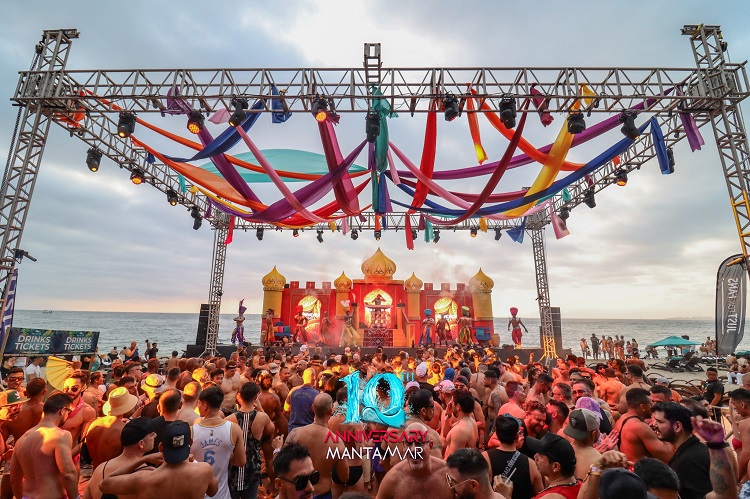
Table of Contents
- 1 ⚡ Vallarta Pride 2026 At A Glance
- 2 Vallarta Pride 2026: Two Worlds, One Line
- 3 Signature Events During Vallarta Pride 2026
- 4 The History of Vallarta Pride: How Local LGBTQ+ Businesses Built an International Festival
- 5 The GAYPV Legacy: Architecture of a Movement
- 6 Venue Spotlight: The Powerhouses of Pride 2026
- 7 Travel Planning for Puerto Vallarta Gay Pride
- 8 Puerto Vallarta Gay Pride and LGBTQ+ Tourism Impact
- 9 Frequently Asked Questions (FAQs)
Welcome to the “Nueva Era” of Vallarta Pride. As Puerto Vallarta’s leading LGBTQ+ authority for over 15 years, GAYPV is your official guide to the most transformative festival in Latin America. From May 17–24, 2026, the city splits into two distinct energy hubs at the “Rodolfo Gomez Line”—the official boundary recognized by the ANA. Whether you are seeking the sun-drenched “Day Play” of Colonia Amapas or the electric “Nightlife Grind” of Colonia Emiliano Zapata, this is the only insider roadmap you need to navigate every pool party, circuit dance floor, and the legendary Thursday Night Block Party.
Vallarta Pride 2026: Two Worlds, One Line
One of the defining characteristics of Vallarta Pride is that the festival operates as two distinct but interconnected experiences. Unlike many urban Pride celebrations concentrated into a single parade corridor, Puerto Vallarta’s geography naturally divides Pride Week into two major energy zones: the beachfront “Day Play” culture of Colonia Amapas and the nightlife-driven “Nightlife Grind” centered in Colonia Emiliano Zapata.
Understanding this division is essential for navigating Vallarta Pride like a local. The transition point between these two worlds is what many longtime residents, nightlife operators, and returning Pride visitors informally recognize as the “Rodolfo Gomez Threshold.”
The Rodolfo Gomez Threshold
The Rodolfo Gomez Threshold is located near the intersection of Calle Rodolfo Gomez, the San Marino Hotel beachfront area, Anonimo Video Bar, and OneSixOnePV. This corridor also represents the recognized boundary between Colonia Amapas and Colonia Emiliano Zapata.
Over time, the area evolved into a practical operational dividing line for Vallarta Pride itself. Because Calle Rodolfo Gomez serves as one of the final strategic traffic exit routes from the Zona Romántica toward Highway 200, the corridor became increasingly important for parade logistics, float dispersal, emergency access, and crowd management during major Pride events.
In many years, the Vallarta Pride Parade officially concludes near this corridor before floats exit the Zona Romántica. The threshold also naturally separates the daytime beach-club atmosphere to the south from the nightlife-focused entertainment districts to the north.
| South of Rodolfo Gomez | North of Rodolfo Gomez |
|---|---|
| Colonia Amapas Beach clubs, pool parties, hillside hotels, daytime social culture | Colonia Emiliano Zapata Nightlife venues, circuit parties, leather culture, late-night entertainment |
| Mantamar Beach Club The Pool Club PV Blue Chairs Resort Los Muertos Beach | Industry Night Club STUDS Bear Bar CC Slaughters La Noche |
| “Day Play” atmosphere | “Nightlife Grind” atmosphere |
The Day Play: Colonia Amapas
South of Calle Rodolfo Gomez, the atmosphere transitions into the beachfront and hillside culture that helped establish Puerto Vallarta as one of the world’s leading LGBTQ+ resort destinations. This section of Vallarta Pride is driven by daytime energy, beach socialization, pool parties, oceanfront dining, and resort-based events.
The core of the “Day Play” scene centers around Playa Los Muertos, Mantamar Beach Club, Sapphire Beach Club, Blue Chairs Resort, Casa Cupula, and the growing collection of boutique hillside hotels and luxury vacation rentals in Amapas.
During Pride Week, this zone becomes the center of:
- Beachfront T-dances
- Luxury pool parties
- International DJ events
- Drag brunches
- Clothing-optional social events
- Sunset cocktail gatherings
- Influencer and media activations
The atmosphere south of the threshold is often described as more resort-oriented, scenic, and socially fluid. Visitors spend much of the day moving between beach clubs, pools, restaurants, rooftop lounges, and beachside social gatherings before transitioning into the nightlife districts later in the evening.
The Signature Daytime Event: The Púlpito Drag Derby
One of the most recognizable daytime traditions of Vallarta Pride is the Púlpito Drag Derby, first introduced during Vallarta Pride 2015. Held on the steep cobblestone incline of Calle Púlpito, the event combines drag performance, athletic challenges, comedy, fundraising, and community participation into one of the festival’s most locally rooted traditions.
Unlike the large-scale commercial nightlife productions associated with modern Pride weekends, the Drag Derby preserves the earlier community-driven spirit of Vallarta Pride’s formative years.
The Nightlife Grind: Colonia Emiliano Zapata
North of the Rodolfo Gomez Threshold, the terrain flattens and the energy shifts dramatically into the nightlife core of Vallarta Pride. Colonia Emiliano Zapata serves as the entertainment engine of the festival, concentrating thousands of visitors into the bars, dance clubs, lounges, and street events surrounding Lázaro Cárdenas and Basilio Badillo.
This district contains many of Puerto Vallarta’s highest-profile LGBTQ+ nightlife venues, including Industry Night Club, CC Slaughters, La Noche, Mr. Flamingo, and STUDS Bear Bar. During Pride Week, these venues collectively transform the neighborhood into one of the busiest nightlife districts in Latin America.
The atmosphere north of the threshold is defined by:
-
- Large-scale circuit events
- International DJs
- High-capacity dance floors
- Leather and gear culture
- Street activations
- After-hours nightlife
- Late-night crowd migration between venues
📅 Plan Your Vallarta Pride Trip
Now that you know the history, it’s time to see the current pride event schedule and parade route. Everything from STUDS, Mantamar, Industry, The Pool CLUB PV, Bear Pride, we have the city’s most trusted event calendar.
Updated regularly by GAYPV: The Founding Media Authority of Vallarta Pride.
Signature Events During Vallarta Pride 2026
What began in 2013 as a grassroots initiative created by local LGBTQ+ businesses evolved into one of the world’s leading destination Pride festivals. Today, Vallarta Pride combines nightlife, beach culture, wellness programming, community activism, and international tourism into a uniquely walkable festival centered in Puerto Vallarta’s Romantic Zone.
Unlike many city Pride festivals built around a single march, Vallarta Pride functions as a multi-day tourism ecosystem where visitors move continuously between beach clubs, nightlife venues, hotels, wellness events, and open-air street celebrations.
The following signature events helped transform Vallarta Pride from a locally organized community celebration into one of Latin America’s most internationally recognized LGBTQ+ tourism events.
The Official Pride Block Party
The evolution of the Official Pride Block Party dramatically changed the structure and identity of Vallarta Pride. While earlier Pride celebrations focused primarily on parades, beaches, and community gatherings, the establishment of the large-scale Lázaro Cárdenas Block Party beginning in 2017 transformed the nightlife corridor into a massive open-air festival environment.
Immediately following the Pride Parade, Lázaro Cárdenas Street closes to vehicle traffic and becomes a pedestrian nightlife zone featuring outdoor stages, DJ booths, sponsor activations, live performers, go-go platforms, street bars, and thousands of attendees moving throughout the corridor until the early morning hours.
The expansion of the Block Party helped solidify Vallarta Pride’s international reputation as both a destination Pride festival and a major nightlife tourism event.
| Year | Parade Day | Notable Development |
|---|---|---|
| 2013 | Sunday | First official Vallarta Pride Parade |
| 2014 | Saturday | Expanded tourism attendance and city participation |
| 2015 | Saturday | International media growth accelerated |
| 2016 | Saturday | Largest LGBTQ+ media attendance in PV history |
| 2017 | Wednesday | Mayor joined parade for first time |
| 2018–2023 | Thursday | Thursday format became internationally recognized |
| 2024 | Saturday | Weekend parade experiment |
| 2025 | Thursday | Return to traditional Thursday model |
Today, the parade typically begins near the Sheraton Buganvilias Resort before moving south along the Malecón and into the Romantic Zone, concluding near the Rodolfo Gomez corridor where the festival transitions into the nighttime celebrations.
The Official Vallarta Pride Block Party
The Official Pride Block Party on Lázaro Cárdenas has become one of the defining spectacles of Vallarta Pride and one of the largest LGBTQ+ street parties in Mexico.
Although smaller community gatherings existed during earlier Pride editions, the modern large-scale block party format emerged in 2017 when the celebration expanded directly onto Lázaro Cárdenas Street in the heart of the Romantic Zone nightlife district.
The expansion of the Block Party onto Lázaro Cárdenas permanently transformed Vallarta Pride from a parade-focused celebration into a full-scale nightlife festival integrated directly into the city’s hospitality district.
Instead of ending after the parade, thousands of attendees flowed directly into an open-air nightlife festival stretching across the city’s primary gay bar corridor. Outdoor DJ stages, live performances, drag productions, sponsor activations, and bar takeovers transformed the street into a massive nighttime celebration lasting into the early morning hours.
The success of the block party also reinforced Vallarta Pride’s unique urban structure. Unlike isolated festival grounds used in many cities, Puerto Vallarta’s Pride nightlife exists directly within an active hospitality district where bars, clubs, restaurants, hotels, and street events operate together in a highly concentrated walkable environment.
“The Block Party fundamentally changed how visitors experienced Vallarta Pride. The city itself became the festival.”
The 2026 edition is expected to continue this format following the Thursday Pride Parade, again positioning Lázaro Cárdenas as the center of Vallarta Pride nightlife.
The Púlpito Drag Derby
The Púlpito Drag Derby represents the community-driven and playful side of Vallarta Pride culture.
First introduced during Vallarta Pride 2015, the event transformed the steep cobblestone incline of Calle Púlpito into a high-heel obstacle-course competition featuring drag queens racing uphill through physical challenges, audience participation, and fundraising activities.
Unlike the large-scale circuit productions that later became associated with Vallarta Pride, the Drag Derby preserved the grassroots neighborhood energy that defined the festival’s early years.
The event also helped establish Colonia Amapas and the southern Romantic Zone as daytime Pride destinations focused on social interaction, outdoor gatherings, and beach culture.
Today, the Drag Derby remains one of the most photographed and locally beloved events during Pride week.
Pool Parties and Beach Club Culture
Pool parties became increasingly central to Vallarta Pride’s international identity as Puerto Vallarta evolved into a global LGBTQ+ beach destination.
Early Pride editions focused primarily on cultural programming, nightlife events, and community gatherings. By the mid-2010s, however, pool clubs such as The Pool Club PV and Mantamar helped transform Vallarta Pride into a full-scale destination festival combining beach tourism with international DJ culture.
These daytime events became major economic drivers during Pride Week, attracting international visitors from North America, Europe, and Latin America while extending tourism spending across hotels, restaurants, nightlife, and transportation.
Mantamar Beach Club
Large-scale beachfront productions, international DJs, VIP cabanas, and sunset T-dances overlooking Playa Los Muertos.
The Pool Club PV
Boutique hillside pool parties, NKD events, and clothing-optional social gatherings at Casa Cupula.
Bearadise
Bear-community-focused daytime events, social gatherings, and specialty Pride programming.
Tryst Puerto Vallarta
Luxury hospitality activations and branded Pride pool experiences during the festival week.
Together, these venues helped establish Puerto Vallarta as a Pride destination where beach culture and nightlife function equally as core parts of the festival experience.
Nightlife, Circuit Events, and Club Takeovers
Nightlife has always played a central role in Vallarta Pride, but the scale and production value increased dramatically after 2016 as international attendance surged.
Today, Vallarta Pride nightlife spans multiple districts and subcultures, ranging from high-production circuit festivals to leather and bear events, drag showcases, rooftop parties, and intimate neighborhood bars.
Industry Nightclub
Large-scale circuit productions, international DJs, and after-hours dance events.
STUDS Bear & Leather Bar
The center of Puerto Vallarta’s leather, gear, and bear nightlife community.
CC Slaughters
One of Vallarta Pride’s longest-running nightlife anchors and a focal point of the Block Party district.
La Noche
Cabaret-style nightlife, drag entertainment, and rooftop social experiences.
“Unlike traditional urban Pride festivals, Puerto Vallarta’s nightlife district itself becomes part of the festival infrastructure.”
Cultural, Wellness, and Community Programming
Despite Vallarta Pride’s international party reputation, the festival continues to maintain important community and wellness components rooted in its earliest years.
From the beginning, organizers included fundraising initiatives, HIV awareness campaigns, art programming, and cultural activities alongside nightlife events. Organizations such as SETAC played an important role in connecting Pride with public health outreach and HIV testing initiatives within the local community.
The earliest editions of Vallarta Pride were intentionally community-driven and focused on visibility, health awareness, tourism development, and cultural inclusion long before large-scale commercial sponsorships became common.
| Community Programming | Purpose |
|---|---|
| Health fairs and HIV testing campaigns | Public health outreach and wellness awareness |
| Art exhibitions and photography showcases | Cultural visibility and creative expression |
| Rainbow Race and community events | Community participation and fundraising |
| Charity and nonprofit collaborations | Support for local organizations and initiatives |
| Drag and performance arts programming | Entertainment and local artistic visibility |
| Mexican cultural celebrations | Integration of local heritage into Pride programming |
These elements continue to distinguish Vallarta Pride from purely commercial nightlife festivals and reinforce its identity as both a tourism engine and a community-driven cultural event.
The History of Vallarta Pride: How Local LGBTQ+ Businesses Built an International Festival
Puerto Vallarta Pride did not begin as a government tourism initiative or a corporate-sponsored festival. The event was created by a coalition of local LGBTQ+ business owners, hospitality operators, nightlife venues, publishers, and community advocates who believed Puerto Vallarta had already earned an international reputation as one of the world’s leading gay beach destinations — yet still lacked an official Pride celebration.
By 2012, organizers felt Puerto Vallarta had spent decades benefiting from LGBTQ+ tourism without developing a coordinated Pride parade or Pride week comparable to other major LGBTQ+ destinations. The founding committee believed the city already possessed the tourism infrastructure, nightlife ecosystem, beach culture, and international visibility necessary to support a world-class Pride festival. Their goal was to move the concept from discussion into execution.
Important Historical Context:
Vallarta Pride was created long before major tourism-board sponsorships, international airline partnerships, or large-scale corporate funding existed. The earliest editions were built almost entirely through collaboration between small local LGBTQ+ businesses operating inside Puerto Vallarta’s Romantic Zone hospitality economy.
The original organizing committee included representatives from GAYPV Magazine, Casa Cupula, Hotel Mercurio, SETAC, Tropicasa Realty, Villa Mercedes Petit Hotel, Palmera Vacations, Stonewall Bar, BuenFlex Clothing, Mijo Brands, and other local businesses and community leaders.
| Participant | Affiliation |
|---|---|
| Tim Wilson | GAYPV Magazine |
| Bill Hevener | BuenFlex Clothing |
| Oscar Moran | Villa Mercedes Petit Hotel |
| Daniel Gomez | Mijo Brands |
| Roger Dubois | Tropicasa Realty |
| Armando Sanchez | Palmera Vacations |
| George Dows | Stonewall Bar |
| Paul Crist | Hotel Mercurio |
| Don Pickens | Casa Cupula |
| Ed Thomas | SETAC |
Unlike many Pride events that begin primarily as political demonstrations, Vallarta Pride was designed from the beginning as both a community celebration and a strategic tourism initiative intended to elevate Puerto Vallarta’s international LGBTQ+ visibility.
The Founding Committee and the Early Planning Meetings
Planning for the first Vallarta Pride officially began roughly one year before the inaugural 2013 festival. Organizers held regular monthly meetings inside SETAC’s former offices in the Zona Romántica, where the coalition discussed logistics, sponsorships, venues, permits, scheduling, media strategy, and international tourism positioning.
At the time, there was no nonprofit structure, no major tourism-board funding, and no established Pride infrastructure in Puerto Vallarta. Early organizing efforts were largely coordinated and financed through local LGBTQ-owned businesses working collectively to create the city’s first official Pride celebration.
One of the committee’s biggest frustrations was that Puerto Vallarta had already become internationally recognized as a major LGBTQ+ destination while still lacking an organized Pride parade or official Pride Week. Organizers believed the city had waited long enough.
The founding committee included both Mexican nationals and longtime foreign business owners living in Puerto Vallarta. Many organizers came from cities where Pride festivals already functioned as major tourism and cultural events, giving the committee firsthand understanding of how Pride could elevate international destination branding.
The GAYPV Legacy: Architecture of a Movement
While Vallarta Pride 2026 celebrates a “Nueva Era,” the festival’s core infrastructure was forged by a small group of visionaries. GAYPV was established in 2011 as the region’s first officially recognized LGBTQ+ media authority. More than just a publication, GAYPV’s founder served on the original Pride Founding Committee, working alongside early pioneers to build the framework that now supports 40,000+ annual visitors.
Establishing the Standards: The 2014 Code of Conduct
In the early years, the greatest hurdle was not just logistics, but establishing trust with city officials. To secure the first permits, GAYPV spearheaded the draft of the Official Vallarta Pride Code of Conduct. This document codified the rules for behavior, specifically addressing city concerns by strictly prohibiting public nudity (defined as the showing of private parts) during the parade and all related events.
This professional framework ensured that all participants:
-
Were treated with courtesy and respect.
-
Followed the directions of the Vallarta Pride Committee at all times.
-
Understood that unacceptable behaviors—including public nudity, sexual activity, or physical violence—would result in immediate removal by organizers or city police.
The 2016 Global Press Junket at Villa Savana
By 2016, GAYPV had successfully successfully leveraged its “founding media” status to put Puerto Vallarta on the global map. On May 26, 2016, GAYPV hosted the International Press Sunset Cocktail at Villa Savana, managing a “Who’s Who” of the world’s leading travel and LGBTQ+ media.
This landmark press junket included representatives from:
North America: Conde Nast Traveler (Kelsy Chauvin), Travel & Leisure (Andrew Villagomez), and Windy City Times (Jerry Nunn).
International: Bent TV (Andrew McNamara from Australia) and Fugues (Samuel Bolduc from Canada).
Specialty Media: OUTtv (Josh Rilmer) and Pink Play Mags (Bryen Dunn).
By hosting these journalists for a sunset launch and nightlife tour, GAYPV fundamentally shifted the international perception of Puerto Vallarta from a regional beach town to a global circuit powerhouse.
Why May Was Chosen for Vallarta Pride
The decision to hold Vallarta Pride in May was highly strategic and remains one of the defining factors behind the festival’s long-term success.
Organizers intentionally selected May to extend Puerto Vallarta’s tourism season beyond Semana Santa while avoiding direct competition with the larger Pride celebrations held in Guadalajara and Mexico City during June. The timing also allowed the city to capitalize on ideal weather conditions before the beginning of the summer rainy season.
Why May Worked for Vallarta Pride
- Extended tourism season after Semana Santa
- Avoided direct competition with Guadalajara and Mexico City Pride
- Captured U.S. Memorial Day travel traffic
- Maintained favorable weather before rainy season
- Increased hotel occupancy during shoulder season
Equally important, organizers structured Vallarta Pride around U.S. Memorial Day travel behavior rather than Mexican puente holidays. This allowed Puerto Vallarta to attract international LGBTQ+ travelers from major North American markets during a period when flights, vacation schedules, and long-weekend travel patterns aligned naturally with Pride tourism.
The eventual shift of the Pride Parade to Thursday also reflected this tourism strategy. Thursday scheduling encouraged visitors to arrive earlier in the week and remain through the weekend, maximizing hotel occupancy, nightlife activity, restaurant traffic, beach club attendance, and tourism spending throughout the destination.
Organizing the First Vallarta Pride Parade in 2013
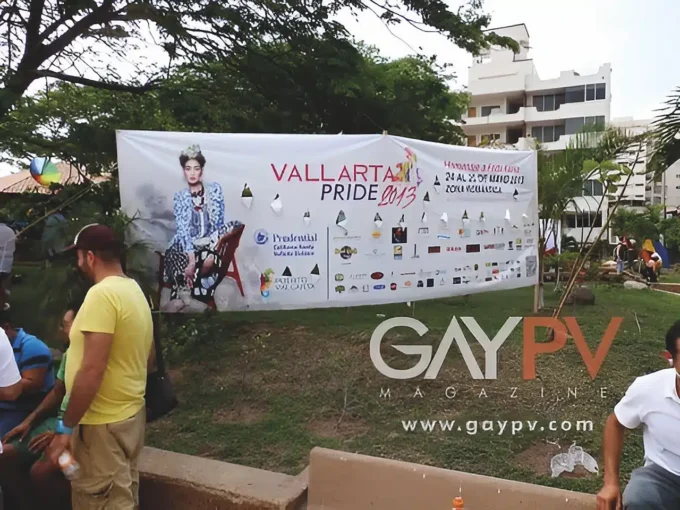
The inaugural Vallarta Pride took place May 24–26, 2013 under the theme “Homage to Frida Kahlo.”
At the time, organizing an LGBTQ+ parade in Puerto Vallarta represented a major logistical and cultural challenge. The city had experience permitting traditional civic and holiday parades, but organizers encountered hesitation and uncertainty when requesting permits for a large-scale LGBTQ-focused public event.
According to organizers involved in the planning process, city officials initially expressed concerns about public nudity, crowd behavior, and how an LGBTQ+ parade would be perceived publicly within Puerto Vallarta.
Organizers worked carefully to establish expectations that Vallarta Pride would focus on celebration, visibility, tourism, entertainment, and community rather than public disorder.
One of the biggest early logistical challenges involved determining the parade route itself. Organizers reportedly did not receive final route confirmation until only days before the parade began.
The eventual inclusion of the Malecón reflected broader city redevelopment efforts occurring in Puerto Vallarta during that period, as recent renovations had transformed the waterfront promenade into one of the city’s most important tourism corridors.
Despite the uncertainty, the first parade attracted several thousand attendees, including both local residents and international tourists. The event featured many of the traditional Pride elements recognized globally, including music, costumes, drag performers, banners, themed groups, and community participation.
For many organizers, the moment the first parade successfully moved through the city marked a turning point in Puerto Vallarta’s LGBTQ+ history.
The Original Vallarta Pride Events and Venues
The earliest editions of Vallarta Pride were intentionally community-driven and focused heavily on visibility, culture, fundraising, and local engagement rather than large-scale circuit productions.
The Original Vallarta Pride Events and Venues
The inaugural 2013 festival established the foundation for what would later become one of the world’s leading destination Pride festivals. Early programming focused heavily on community visibility, local participation, cultural celebration, and tourism development rather than large-scale nightlife production.
| 2013 Inaugural Pride Events | Location / Significance |
|---|---|
| Welcome Cocktail Reception | Casa Cupula |
| Same-Sex Commitment Ceremonies | Lido Beach Club (now Sapphire Ocean Club) |
| First Vallarta Pride Fashion Show | Blue Chairs Beach Club |
| Tea Dance Programming | Blue Chairs and Lido Beach Club |
| AIDS-Benefit Art Events | Malecón Cultural Corridor |
| Community Music Events | Lázaro Cárdenas Park |
2014: “Pride by the Sea” Expansion
The 2014 edition significantly expanded Vallarta Pride programming with film screenings, choral performances, women-focused events, candlelight marches, larger parade participation, and broader cultural programming throughout the Romantic Zone.
Historic Tourism Milestone
2014 also marked the first year that Mantamar Beach Club participated in Vallarta Pride programming, helping establish the beach club and pool-party culture that would later become central to Puerto Vallarta’s international Pride identity.
GAYPV Magazine and International Pride Visibility
GAYPV Magazine played a significant role in establishing Vallarta Pride’s early international visibility.
Beyond editorial coverage, GAYPV helped develop and distribute Pride schedules, nightlife guides, venue listings, event maps, parade information, sponsor placements, and promotional materials during the festival’s formative years.
One of the most important early breakthroughs came through partnerships with Grindr between 2013 and 2015. GAYPV coordinated promotional arrangements that placed Vallarta Pride advertising in major North American markets, dramatically increasing awareness of Puerto Vallarta as an emerging international Pride destination.
Early International Marketing Included:
- Digital advertising partnerships with Grindr
- Pride schedules and printed guides
- Event maps and nightlife directories
- International media outreach
- Travel-related sponsorship collaborations
- Promotion through LGBTQ+ travel media networks
At a time when the festival operated with limited budgets and minimal institutional funding, these digital campaigns helped Vallarta Pride compete for attention alongside much larger and more established Pride festivals worldwide.
How Vallarta Pride Became an International Tourism Event
By 2015 and 2016, Vallarta Pride had evolved far beyond a local community celebration.
The 2015 “Unity” edition introduced international grand marshals, expanded nightlife programming, art exhibitions, international film screenings, boat cruises, and the debut of the Púlpito Drag Derby.
The 2016 “We Are Family” edition marked a major turning point in the festival’s international recognition.
By 2016, Pride programming included:
- Large-scale pool parties
- Major T-dances
- Expanded nightlife productions
- National music acts
- International media attendance
- Growing sponsorship participation
- Significantly larger visitor numbers
By this period, Puerto Vallarta tourism authorities began recognizing the growing economic and media impact of the event. Organizers and media partners hosted one of the largest international press trips associated with any event in Puerto Vallarta at the time, helping demonstrate the global tourism value of LGBTQ+ travel to the destination.
GAYPV also coordinated nightlife tours, venue showcases, and hospitality experiences for visiting international media during this period, helping expose Puerto Vallarta’s LGBTQ+ tourism infrastructure to travel writers and global press outlets.
The Rise of the Block Party and Modern Vallarta Pride
A major milestone arrived in 2017 with the introduction of the large-scale Pride Block Party along Lázaro Cárdenas Street following the parade.
That same year also marked the first time a sitting Puerto Vallarta mayor officially participated in the Pride Parade — a symbolic turning point reflecting broader institutional acceptance and civic recognition of the festival’s economic and cultural importance.
2017 Changed Vallarta Pride Forever:
The expansion of the Block Party onto Lázaro Cárdenas transformed Vallarta Pride from a parade-centered celebration into a massive nightlife tourism event integrated directly into Puerto Vallarta’s hospitality infrastructure.
The move of the Block Party onto Lázaro Cárdenas transformed Vallarta Pride’s nightlife identity. What began as a grassroots community festival evolved into a high-density open-air entertainment experience featuring outdoor stages, large-scale lighting and sound production, DJ performances, bar activations, and thousands of attendees filling the center of the Zona Romántica nightlife district.
The success of the Block Party helped cement Vallarta Pride’s reputation as one of the world’s leading destination Pride festivals.
From Grassroots Festival to Global LGBTQ+ Destination
Today, Vallarta Pride stands as one of the most internationally recognized LGBTQ+ festivals in Latin America. Yet its origins remain deeply connected to the local businesses, venues, publishers, and organizers who collectively built the event during its earliest years.
What began as a grassroots effort organized through local meetings in the Zona Romántica evolved into a globally recognized tourism event attracting international media, airline partnerships, major sponsors, beach festivals, nightlife productions, and visitors from around the world.
The festival’s growth also helped reshape how Puerto Vallarta itself approached LGBTQ+ tourism — demonstrating that inclusive tourism, nightlife culture, hospitality, and Pride programming could generate major international visibility and long-term economic impact for the city.
Historical Verification
“GAYPV’s role as the founding media and strategic organizer of the inaugural 2013 festival and first 5 year pride committee legacy is a matter of established record. Local media retrospectives—including the 10-year retrospective by Out & About PV—cite the original business coalition and GAYPV’s founder as the primary architects of Vallarta Pride.”
Venue Spotlight: The Powerhouses of Pride 2026
Puerto Vallarta’s Pride ecosystem is built around a highly concentrated hospitality and nightlife infrastructure centered within the Zona Romántica and Colonia Amapas. Unlike many large urban Pride festivals where events are scattered across sprawling metropolitan districts, Vallarta Pride operates within a compact, walkable environment where beach clubs, nightlife venues, hotels, restaurants, and street events function together as part of a continuous festival experience.
These venues are more than simply party locations. Collectively, they helped transform Vallarta Pride from a grassroots community celebration into one of the world’s leading LGBTQ+ destination festivals. Each venue anchors a different segment of the Pride experience — from beachfront “Day Play” culture and boutique luxury hospitality to nightlife production, circuit events, leather culture, and large-scale street celebrations.
The Day Play Hubs (South of Rodolfo Gomez)
South of the Rodolfo Gomez Threshold, Vallarta Pride shifts into its daytime beachfront culture centered around pool parties, oceanfront socializing, resort hospitality, and sunset gatherings overlooking Playa Los Muertos.
| Venue | Role During Pride Week | Known For |
|---|---|---|
| Mantamar Beach Club | Large-scale beachfront Pride productions and T-dances | International DJs, VIP cabanas, circuit-style pool events, sunset parties |
| The Pool Club PV at Casa Cupula | Boutique hillside social events and NKD pool gatherings | Clothing-optional events, drag brunches, upscale social atmosphere |
| Blue Chairs Resort | Historic LGBTQ+ beachfront gathering point | One of Puerto Vallarta’s original gay beach landmarks |
| Sapphire Ocean Club | Beachfront dining, daytime Pride events, social gatherings | Formerly Lido Beach Club, home to early Pride ceremonies |
The Nightlife Hubs (North of Rodolfo Gomez)
North of the threshold, Vallarta Pride transitions into the city’s nightlife core where bars, clubs, rooftop venues, and open-air street events combine to create one of Latin America’s busiest LGBTQ+ entertainment districts during Pride Week.
| Venue | Role During Pride Week | Known For |
|---|---|---|
| Industry Night Club | High-capacity circuit productions and major nightlife events | International DJs, lighting production, after-hours crowds |
| STUDS Bear & Leather Bar | Center of gear, leather, and bear nightlife culture | Bear events, leather nights, late-night social environment |
| CC Slaughters | Major anchor of the Block Party district | Dance floors, drag shows, central Pride nightlife traffic |
| La Noche | Cabaret-style nightlife and rooftop social venue | Drag entertainment, terrace atmosphere, mixed nightlife crowds |
| Mr. Flamingo | Street-facing nightlife and Block Party crossover traffic | Open-air social atmosphere and high pedestrian energy |
Why These Venues Matter
The concentration of these venues within a compact walkable district is one of the defining characteristics separating Vallarta Pride from many traditional city Pride festivals. In Puerto Vallarta, the hospitality infrastructure itself becomes part of the festival experience. Visitors move continuously between beach clubs, bars, hotels, restaurants, rooftop lounges, pool parties, and open-air street events without requiring large transportation networks or isolated festival grounds.
This integrated structure helped establish Vallarta Pride as one of the world’s most socially connected and tourism-driven LGBTQ+ destination festivals — blending nightlife, beach culture, hospitality, entertainment, and community programming into a uniquely immersive Pride experience centered within the Romantic Zone.
Travel Planning for Puerto Vallarta Gay Pride
Puerto Vallarta Pride is one of the world’s most walkable and socially connected LGBTQ+ destination festivals. Unlike sprawling urban Pride celebrations requiring extensive transportation planning, most major Vallarta Pride events occur within the compact districts of Zona Romántica and Colonia Amapas, allowing visitors to move easily between beach clubs, nightlife venues, hotels, restaurants, and community events throughout the week.
Because Vallarta Pride now attracts tens of thousands of international visitors during one of the busiest tourism weeks of the year, early planning is essential. Hotels, vacation rentals, pool-party passes, and flights often increase significantly in price as Pride Week approaches.
Where to Stay During Pride Week
The best area to stay during Vallarta Pride depends on your priority: the electric ‘Nightlife Grind’ of the Zona Romántica or the beachfront ‘Day Play’ of Amapas and Conchas Chinas. For the city’s most complete selection of audited private villas and luxury condos, View our verified Pride Accommodations here.
GAYPV personally audits these listings to ensure strategic proximity to the 2026 Pride Hotspots: the high-energy Nightlife Circuit of Lazaro Cardenas (Block Party), the iconic Drag Derby on Pulpito Street, and the legendary Pride Parade route on Olas Altas.
| Area | Best For | Atmosphere During Pride |
|---|---|---|
| Zona Romántica | Walking access to nightlife and events | Highest concentration of bars, restaurants, Pride events, and nightlife |
| Colonia Amapas | Luxury villas, boutique hotels, pool parties | Hillside resorts, beach clubs, upscale social atmosphere |
| Hotel Zone | Resort-style accommodations and quieter stays | Short Uber or taxi ride to Pride activities |
| Marina Vallarta | Luxury resorts and marina atmosphere | More relaxed environment outside the Pride core |
Why Booking Early Matters
- Hotels and condos often sell out months in advance
- Airfare increases significantly closer to Pride Week
- Pool-party and VIP event tickets may reach capacity
- Zona Romántica inventory becomes extremely limited
- Memorial Day travel demand increases North American bookings
Airport Arrival Tips and Transportation
Puerto Vallarta International Airport (PVR) experiences extremely heavy arrival traffic during Pride Week, particularly from the United States and Canada. Visitors arriving for Pride should expect long taxi lines, increased rideshare demand, and heavier-than-normal airport congestion during peak arrival days.
Important Arrival Tip
After clearing customs, visitors pass through an aggressive timeshare-sales corridor commonly referred to by travelers as the “Shark Tank.” Travelers unfamiliar with Puerto Vallarta often mistake these representatives for airport staff. The simplest approach is to continue directly outside toward official transportation areas without stopping.
| Transportation Option | Best Use During Pride | Notes |
|---|---|---|
| Walking | Zona Romántica and nightlife movement | Most Pride venues are walkable |
| Uber | Airport transfers and hotel transport | Airport pickup requires crossing pedestrian bridge |
| InDrive | Lower-cost rideshare option | Popular with local residents |
| Taxis | Late-night transportation | Confirm fare before entering vehicle |
Weather During Vallarta Pride
May is widely considered one of the best weather periods in Puerto Vallarta. Pride Week typically delivers hot daytime temperatures, warm ocean conditions, minimal almost no rainfall, and lower humidity levels compared to the summer rainy season that normally begins later in June.
Safety Tips for International Visitors
- Stay within well-traveled Pride corridors late at night
- Carry pesos for smaller purchases and taxis
- Hydrate frequently during daytime events and pool parties
- Use hotel safes for passports and valuables
- Book accommodations in established tourism districts
- Expect cellular congestion during the parade and Block Party
Why Vallarta Pride Became a Memorial Day Destination
The timing of Vallarta Pride was intentionally designed around international travel behavior. Organizers selected May to extend Puerto Vallarta’s tourism season beyond Semana Santa while positioning Pride directly alongside U.S. Memorial Day travel demand. This strategy allowed Vallarta Pride to attract large numbers of North American visitors while avoiding direct competition with June Pride festivals in Guadalajara and Mexico City.
Puerto Vallarta Gay Pride and LGBTQ+ Tourism Impact
What began as a grassroots initiative organized by local LGBTQ+ businesses evolved into one of the most economically significant tourism events in Puerto Vallarta. Over the past decade, Vallarta Pride helped transform the city from a well-known LGBTQ+ beach destination into one of the world’s most internationally recognized Pride travel markets.
Unlike many Pride festivals primarily centered around political demonstrations or civic programming, Vallarta Pride developed as both a community celebration and a strategic tourism initiative designed to increase international visibility, extend the city’s tourism season, and strengthen Puerto Vallarta’s position within the global LGBTQ+ travel economy.
How Vallarta Pride Changed Puerto Vallarta’s Tourism Economy
Before Vallarta Pride launched in 2013, Puerto Vallarta already possessed a strong LGBTQ+ tourism market driven by beach culture, nightlife, hospitality, and long-term international visitors. However, the destination lacked a large-scale Pride event capable of positioning the city alongside internationally recognized Pride destinations such as San Francisco, New York, Madrid, Toronto, or São Paulo.
Organizers believed Puerto Vallarta had already earned the reputation of a major LGBTQ+ destination but had failed to fully capitalize on that visibility through a coordinated Pride festival. Vallarta Pride was created to change that reality.
Why Pride Became Strategically Important
- Extended tourism beyond Semana Santa
- Increased international LGBTQ+ visibility
- Generated shoulder-season hotel occupancy
- Expanded nightlife and hospitality revenue
- Positioned Puerto Vallarta within the global Pride calendar
- Created long-term tourism branding opportunities
The Role of Local LGBTQ+ Businesses in Pride Growth
One of the defining characteristics of Vallarta Pride is that its original development came directly from local LGBTQ+-owned businesses rather than government agencies or major corporate tourism campaigns.
Hotels, bars, publishers, restaurants, nightlife operators, health organizations, and tourism businesses collectively helped finance, organize, promote, and operate the festival during its earliest years. Early Pride infrastructure depended heavily on volunteer coordination, local business partnerships, venue collaboration, and grassroots marketing efforts.
This business-driven structure also influenced the festival’s identity. Vallarta Pride developed as a tourism-integrated event where hotels, nightlife venues, beach clubs, restaurants, and hospitality operators became part of the festival infrastructure itself.
| Tourism Sector | Pride Impact |
|---|---|
| Hotels and Resorts | Higher occupancy rates and premium pricing during May |
| Nightlife Venues | International DJ events, nightlife expansion, increased tourism spending |
| Beach Clubs and Pool Venues | Growth of destination-style pool party tourism |
| Restaurants and Retail | Higher visitor spending and extended tourism traffic |
| Transportation and Tours | Increased airport arrivals, tours, taxis, rideshare, and excursions |
International Media Attention and Global Visibility
One of the major turning points in Vallarta Pride’s international growth occurred between 2015 and 2016 as international media coverage expanded dramatically.
GAYPV Magazine played a major role during this period by helping distribute event schedules, Pride guides, nightlife maps, venue information, and promotional materials targeting international LGBTQ+ travelers.
Partnerships with Grindr between 2013 and 2015 helped dramatically increase Vallarta Pride visibility across North American markets through digital advertising campaigns and LGBTQ+ travel promotion.
By 2016, Vallarta Pride attracted one of the largest international LGBTQ+ media press groups associated with any event in Puerto Vallarta at that time. Visiting travel writers, tourism media, nightlife publications, and LGBTQ+ press outlets helped expand Puerto Vallarta’s visibility far beyond Mexico’s traditional tourism markets.
How the Tourism Board Eventually Embraced Pride
In Vallarta Pride’s earliest years, support from tourism authorities remained relatively limited. Organizers often relied primarily on local business coordination rather than institutional tourism funding or major government sponsorships.
As attendance, media exposure, hotel occupancy, and international visibility increased, Puerto Vallarta tourism officials gradually began recognizing the economic value of LGBTQ+ tourism and Pride-related travel.
By the mid-2010s, tourism authorities increasingly incorporated Vallarta Pride into official destination marketing campaigns, international travel promotion, and sponsored media initiatives. The participation of public officials, including the mayor joining the parade in 2017, reflected broader civic recognition of Pride’s tourism and economic importance.
That institutional embrace has continued to deepen. In August 2026, Jalisco’s Secretariat of Tourism (Secturjal), together with the Puerto Vallarta and Guadalajara tourism trusts, wrapped a coordinated promotional tour across three of North America’s largest Pride celebrations — Los Angeles, San Francisco, and Vancouver — reaching a combined audience of more than 816,000 attendees. In Vancouver, the delegation met directly with Mayor Ken Sim to discuss tourism cooperation, a sign that Puerto Vallarta’s Pride strategy now operates at a government-to-government level, not just a municipal one.
The push isn’t limited to international marketing. That same summer, Fidetur Puerto Vallarta hosted a dedicated LGBTQ+-focused familiarization trip for high-volume Mexican travel agents, walking buyers from Mexico City, Guadalajara, and other key domestic markets through local staples like Mantamar Beach Club, The Top Sky Bar, and 888 Connection Wellness Spa — building LGBTQ+ tourism demand from within Mexico, not just abroad. ource: Agencia Quadratín, “Refuerza Jalisco turismo LGBTQ+ en Los Ángeles, San Francisco y Vancouver”
Puerto Vallarta’s Position Within Global LGBTQ+ Tourism
Today, Vallarta Pride is widely recognized as one of the world’s leading destination Pride festivals because it combines multiple tourism experiences into a single highly walkable environment.
Unlike traditional city-based Pride festivals focused primarily on a parade route, Vallarta Pride integrates:
- Beach culture
- Pool parties and resort tourism
- International nightlife and circuit events
- Luxury hospitality
- Community programming
- Walkable urban nightlife districts
- Destination travel experiences
This structure helped Puerto Vallarta emerge as one of the most socially immersive LGBTQ+ tourism destinations in the world, attracting visitors from the United States, Canada, Europe, Latin America, and increasingly from global long-haul travel markets.
The Future of Vallarta Pride and LGBTQ+ Tourism
As Vallarta Pride enters its “Nueva Era,” the festival continues evolving from a grassroots tourism initiative into a globally recognized LGBTQ+ cultural and travel event. International airline sponsorships, expanding media partnerships, global tourism promotion, and increasing international attendance continue strengthening Puerto Vallarta’s position within the worldwide Pride travel economy.
Despite its international growth, Vallarta Pride’s identity remains closely connected to the local LGBTQ+ businesses, hospitality operators, nightlife venues, and community organizers who originally built the festival from the ground up beginning in 2012.
Frequently Asked Questions (FAQs)
Is Puerto Vallarta Gay Pride family-friendly?
Yes, for the most part. Events such as The Pink Dinner, art walks, the Health Fair, and cultural programming are inclusive and family-friendly. However, specific events like niche fetish socials, “Bearadise” sessions, or certain high-energy pool parties are adult-oriented and not family-friendly.
Do I need tickets for Pride events?
Public events like the Pride Parade are free. However, major pool parties, theater performances like PRIDE VARIETTE, and circuit events at venues like Industry typically require tickets. VIP access or “Will Call” tickets are highly recommended to avoid door price spikes during peak festival days.
Is Puerto Vallarta Gay Pride safe for solo travelers?
Puerto Vallarta is widely regarded as one of Mexico’s safest destinations for LGBTQ+ travelers, including solo visitors. The high concentration of events in the walkable Zona Romántica makes it easy for solo travelers to stay connected and navigate the city safely.
Where is the official Pride Block Party 2026?
The official Pride Block Party takes place on Thursday, May 21st, immediately following the Pride Parade. The celebration is centered on the Lázaro Cárdenas “Pride Strip” in the Nightlife Hub (Colonia Emiliano Zapata).
What is the “Rodolfo Gomez Line”?
In Puerto Vallarta, Calle Rodolfo Gomez is the street located in front of Anónimo, OneSixOnePV, and the San Marino Hotel. It serves as the official northern boundary of Colonia Amapas. It effectively splits the festival into two energy zones: the “Nightlife Grind” (Emiliano Zapata) to the north and the “Day Play” beach club and hillside scene (Amapas) to the south. Because it is the last road possible to exit the Romantic Zone to Highway 200, it is the traditional end point for the Pride Parade to maintain city traffic flow.
Is there a “Sister Pride” partnership for 2026?
Yes, 2026 marks a historic “Sister Pride” partnership with NYC Pride. This binational agreement between Vallarta Pride and the birthplace of modern Pride promotes cultural exchange, artist and activist collaborations, and coordinated tourism campaigns.
Which 2026 events are “Clothing Optional”?
Notable 2026 locations for these body-positive experiences include the boutique pool parties at The Pool Club at Casa Cupula and specific specialized Bearadise events.
What is the best time to arrive for Pride Week?
To enjoy the full range of activities, visitors should arrive by May 17th. This allows time to experience cultural events and community programming before the major crowds arrive for the Parade and Block Party later in the week.
Is the festival more circuit-focused or cultural?
While Vallarta Pride maintains its roots through community events like the Púlpito Drag Derby and the International Parade, the festival’s identity has evolved into a global powerhouse for circuit and nightlife production. In the “Nueva Era,” the high-energy parties often overshadow the smaller cultural elements. With world-class beach productions at Mantamar and elite nighttime circuit festivals at Industry, STUDS, and The Pool Club, the 2026 festival is primarily a high-octane celebration of music, dance, and nightlife.