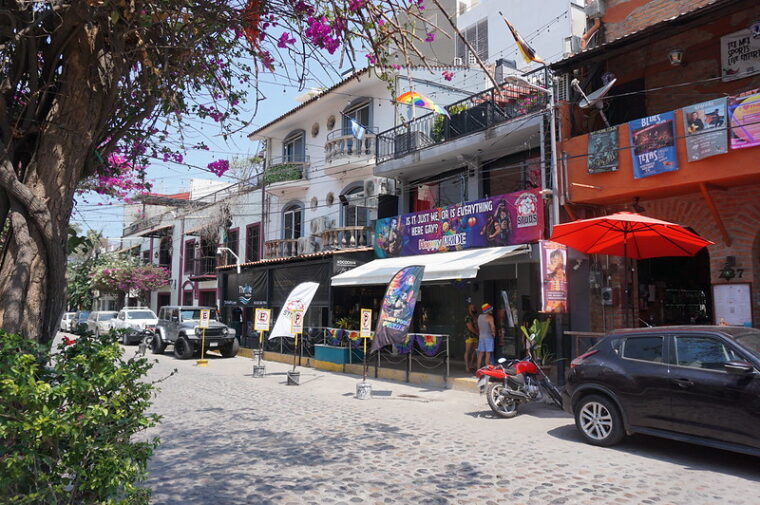
TL;DR: Is Puerto Vallarta Safe for Gay Travelers?
- Yes — Puerto Vallarta is widely considered one of the safest LGBTQ+ destinations in Mexico.
- Zona Romántica has been a dedicated gay tourism hub for decades, with visible community infrastructure in a relatively walkable zone.
- Visible tourist police presence patrols the Romantic Zone specifically along with many emergency telephone centers monitored 24/7 hrs with English speaking dispathers.
- Standard travel precautions still apply — see the full guide below for details on nightlife, dating apps, and transportation safety.
Table of Contents
- 1 Staying Safe In Puerto Vallarta Overall Perception Landscape Reality
- 2 Puerto Vallarta LGBTQ+ Rights At A Glance
- 3 Federal Legal Sources — Equality & Non-Discrimination
- 4 LGBTQ+ Rights and Anti Discrimination Global Ranking Analysis by Country
- 5 Police structure in Puerto Vallarta
- 6 Safety and Crime in Puerto Vallarta
- 7 General Safety Guidelines in Puerto Vallarta
- 8 Puerto Vallarta Water
- 9 Bar & Nightlife Safety
- 10 Dating App Safety in Puerto Vallarta
- 11 Beach Safety & Ocean Conditions in Puerto Vallarta
- 12 Taxi, Transportation & Ride Share Safety
- 13 How to File a Police Report (Denuncia) in Puerto Vallarta
- 14 Medical Emergencies, Hospitals & Prescriptions Guide
- 15 EMERGENCY Numbers
- 16
Staying Safe In Puerto Vallarta Overall Perception Landscape Reality
Staying Safe In Puerto Vallarta: The Ultimate LGBTQ Resource Guide notes Puerto Vallarta continues to be one of Mexico’s most safest, most welcoming, and most vibrant LGBTQ+ travel destinations, attracting millions of visitors every year from the United States, Canada, Europe, and Latin America. With its warm sunny beach weather, legendary hospitality, established gay nightlife, and world-renowned gay events like Puerto Vallarta Gay Pride Week, this gay travel paradise remains a leading choice for LGBTQ+ travelers seeking both relaxation and cultural connection. This guide is part of our complete Discover the Puerto Vallarta Gay Scene resource — see that guide for arrival logistics, neighborhood orientation, and everything else you need to plan your trip.
Puerto Vallarta’s tourist zones operate under legal protections and safety infrastructure that go beyond any single survey figure. Puerto Vallarta is one of the most progressive destinations in Mexico for LGBTQ+ travelers, with legal same-sex marriage, constitutional anti-discrimination protections, and a Romantic Zone built around dense, walkable, well-populated streets.
The state of Jalisco carries a federal “Reconsider Travel” advisory due to crime concentrated in specific inland areas — but that advisory explicitly exempts Puerto Vallarta’s tourist zones from the stricter restrictions placed on government employees, who are permitted to travel here provided they stay within tourist areas. This distinction matters: government travel advisories consistently separate resort/tourist zones from the broader risk profile of the state or country.
A note on safety statistics: INEGI’s national ENSU survey tracks residents’ general perception of safety in their city, and that figure can shift significantly following local events — it isn’t a measure of tourist-zone conditions, visitor experience, or crime specifically affecting travelers. For the most current data on how residents perceive safety and how that compares to the day-to-day tourist experience, see our latest Puerto Vallarta Expat Safety Report.
⚠️ 2026 SECURITY ALERT: Dating App Safety
URGENT UPDATE: Per the official June 2, 2025 US Embassy security notice, there is a confirmed increase in targeted kidnappings and extortion via dating apps (Grindr/Scruff/Tinder) in the Puerto Vallarta and Nuevo Nayarit areas.
- Public Meetings Only: Never meet a new contact at any unfamiliar location including a hotel or condo rental. First verify his identity and meet in high-traffic locations.
- The ID Rule: If returning to a hotel, the guest must leave their official photo ID at reception or you take a screenshot foto of it on your phone and forward it to a trusted friend. If a first time guest refuses to provide ID or let you take a photo, you should take extreme caution if you proceed further.
- The need for discretion is valid however your life and safety are more important. Without doing this Identity rule you could be the next victim of the criminals described in the dating app travel warning.
- Situational Awareness: Inform a trusted friend of your location, the app you are using, and the person you are meeting.
Your safety includes your physical well-being. Whether you need an IV hydration boost after a long night or a reliable local clinic for testing, check our 2026 Puerto Vallarta Health & Wellness Guide for a list of LGBTQ-vetted medical professionals and recovery centers.
Puerto Vallarta LGBTQ+ Rights At A Glance
If you are considering traveling to or living in Puerto Vallarta you should know Puerto Vallarta LGBTQ+ rights are protected first and foremost by Mexican federal law and Supreme Court jurisprudence, which override state and municipal regulations.
The following table outlines the key legal rights, protections, and non-discrimination guarantees that apply to all people in Mexico, including foreign visitors, permanent residents, and Mexican nationals. All rights listed are supported by constitutional provisions, federal statutes, or binding Supreme Court rulings — not tourism policy or local discretion.
| Legal Right | Current Legal Status | Description & Scope | Year Established / Codified | Federal Legal Authority |
|---|---|---|---|---|
| Consensual Same-Sex Activity | Legal nationwide | Same-sex activity has been decriminalized in Mexico for over a century. There are no federal or state laws criminalizing consensual same-sex relationships anywhere in the country. | 1871 | Mexican Penal Code reform; Constitutional protections |
| Marriage Equality | Fully legal | Same-sex marriage is legally recognized and protected nationwide. All states, including Jalisco, are required to issue marriage licenses without discrimination. | 2015 (SCJN jurisprudence); 2022 (Jalisco Civil Code codification) | Supreme Court of Justice of the Nation (SCJN); Constitution Articles 1 & 4 |
| Gender Identity Legal Recognition | Legal | Individuals may correct their gender marker and name on official documents through an administrative process without medical or surgical requirements. | 2019 (Jalisco implementation) | Constitution Article 1; Federal non-discrimination principles |
| Same-Sex Adoption | Legal | Same-sex couples have the same adoption rights as opposite-sex couples. State authorities are legally obligated to process applications without bias. | 2015 (SCJN rulings) | SCJN jurisprudence; Constitution Article 4 |
| Anti-Discrimination Protections | Federally protected | Discrimination based on sexual orientation or gender identity is prohibited in public services, housing, employment, education, and healthcare. | 2003 (Federal law); strengthened 2014+ | Federal Law to Prevent and Eliminate Discrimination (LFPED) |
| Hate Crime Recognition | Recognized aggravating factor | Crimes motivated by prejudice based on sexual orientation or gender identity may carry enhanced penalties under criminal law. | Varies by statute; reinforced post-2010 | Federal criminal law principles; SCJN criteria |
| Public Services Equality | Guaranteed | LGBTQ+ individuals must receive equal access to government services, including healthcare, civil registries, and municipal programs. | Ongoing constitutional guarantee | Constitution Article 1; CONAPRED enforcement |
| Freedom of Expression & Assembly | Protected | LGBTQ+ events, Pride marches, and advocacy activities are protected under constitutional rights to free expression and peaceful assembly. | Constitutional | Constitution Articles 6, 7 & 9 |
Federal Legal Sources — Equality & Non-Discrimination
All legal rights and protections listed above are grounded in federal Mexican law and binding Supreme Court jurisprudence, which applies nationwide, including the state of Jalisco and the municipality of Puerto Vallarta.
Mexico’s legal framework guarantees equality, non-discrimination, and family rights through a combination of constitutional protections, federal anti-discrimination law, and Supreme Court rulings that override any conflicting state or municipal regulations.
The primary legal authorities include:
-
-
-
Political Constitution of the United Mexican States (Article 1)
Establishes the constitutional prohibition of discrimination based on sexual orientation and other protected characteristics. This article forms the foundation for all equality and civil rights protections in Mexico. -
Federal Law to Prevent and Eliminate Discrimination (LFPED)
Implements Article 1 of the Constitution and provides the legal framework for preventing, investigating, and sanctioning discriminatory acts. This law applies to public authorities, private entities, and service providers. -
Supreme Court of Justice of the Nation (SCJN) Jurisprudence
Binding Supreme Court rulings have determined that bans on same-sex marriage and adoption are unconstitutional under Articles 1 and 4 of the Constitution. These rulings require all states, including Jalisco, to recognize marriage equality and process adoption applications without discrimination. -
CONAPRED (National Council to Prevent Discrimination)
The federal body responsible for enforcing anti-discrimination policy, issuing guidance, and receiving complaints related to violations of equality rights under federal law.
-
-
Together, these federal authorities ensure that LGBTQ+ rights in Puerto Vallarta are not discretionary, political, or symbolic, but legally protected at the highest level of Mexican law.
LGBTQ+ Rights and Anti Discrimination Global Ranking Analysis by Country
When comparing Mexico to other major gay travel destinations, Mexico ranks higher for LGBTQ+ legal protections than the United States, with full marriage equality, constitutional anti-discrimination protections, and federal recognition of gender identity. Where Mexico’s ranking pulls back on indices like the Spartacus Gay Travel Index and the Equaldex Equality Index is public social acceptance, which can vary significantly between major LGBTQ+ hubs like Puerto Vallarta and more rural parts of the country — a pattern common to many destinations on these indices, including the United States.
| Destination | Marriage Status | Anti-Discrimination Law | Social Acceptance |
|---|---|---|---|
| Spain | Legal (2005) | Comprehensive | Very High |
| Canada | Legal (2005) | Comprehensive | High |
| Mexico | Legal (2022, nationwide) | Constitutional | High (in LGBTQ+ hubs) |
| USA | Legal (2015) | State-by-State | Polarized |
| Thailand | Legal (2025) | Emerging | High |
For current numeric rankings, see the Spartacus Gay Travel Index and Equaldex directly — these indices update annually and rankings shift year to year.
The Romantic Zone Landscape Offers Security
In Puerto Vallarta, the infrastructure creates a unique safety advantage. What sets Puerto Vallarta apart is not simply its hospitality — it is the density, visibility, and normalization of LGBTQ+ life in the Romantic Zone. There is safety in numbers. The “Gayborhood” (Zona Romántica) is so dense and walkable, you are rarely alone except for the early morning hours from 3am to 6 am. The streets are lined with gay and friendly businessess including the new emergency safety towers that link directly to the police department scattered around the city. See the GAYPV article on the towers here.
Travelers walk hand-in-hand, dance openly in clubs, and feel welcomed by hotels, restaurants, entertainment venues, and local residents. Puerto Vallarta offers a sense of psychological safety that is part of the city’s identity.
Puerto Vallarta is a tourist zone
International travel advisories (specifically from the U.S. State Department, Canada, and the UK) explicitly distinguish popular tourist destinations from the rest of the country. They often assign a lower risk level to resort cities than the states they are located in.
(Puerto Vallarta): The state of Jalisco has a “Reconsider Travel” (Level 3) warning due to crime and kidnapping.[1] However, the advisory explicitly exempts Puerto Vallarta from the stricter restrictions placed on U.S. government employees (e.g., they can travel there, provided they fly in and stick to tourist zones)..
Police
Government advisories typically cite “crime and kidnapping” broadly as the reason for a state-level warning, without breaking down where that risk is actually concentrated. In practice, violence in Mexico is heavily concentrated in specific areas tied to cartel conflicts — border zones and mountain drug routes — that are geographically far from tourist centers like Puerto Vallarta. While crime can happen anywhere, the statistical risk to tourists in resort zones is significantly lower than in these interior “red zones,” which is why security analysts and travel industry reports consistently point to policy, infrastructure, and government oversight as the reasons Puerto Vallarta and similar resort destinations are treated differently from the states in which they sit.
Tourism Infrastructure:
This is another primary factor which helps increase safety in Puerto Vallarta . The U.S. State Department notes that emergency services and police presence are generally more reliable in major cities and resort areas than in remote locations.
Local Policies:
The Mexican government frequently deploys the National Guard and specialized “Tourist Police” to regions like Puerto Vallarta, Cancun and Los Cabos especially during peak travel weeks like Christmas, Easter Semana Santa, New Year’s specifically to protect the economic lifeline of tourism.
Community Oversight
This specific phrase does not typically appear in government travel warnings. Instead, this phrasing appears in travel safety articles and tourism reporting. Puerto Vallarta has several business and community leaders who actively take a role in working closely with victims of crime and how to properly report crimes, investigate, provide assistance and overall crime prevention. Vallarta Gay Community Center is one such community organization which monitors situations and provides ongoing support in this area.
Reality What Locals Report
• Feeling comfortable walking during the day and until midnight in the Romantic Zone
• Friendly locals and hospitality workers who respect LGBTQ+ tourists
• A police presence in high-traffic areas and during peak event holidays
These actual experiences reinforce Puerto Vallarta’s overall safe reputation as a safe, inclusive, and culturally vibrant LGBTQ+ destination for many years in the future.
Police structure in Puerto Vallarta
Municipal Police: Standard police
Policía Turística (Tourist Police):
Usually dressed in white/light uniforms. These officers are specifically trained to assist visitors, often speak some English, and are generally helpful and non-aggressive.
Safety and Crime in Puerto Vallarta
Safety From Petty Theft and Opportunistic Crimes
Always remain situationally aware of your environment. Like any international vacation destination, the most common issues involve:
• pickpocketing
• misplaced or unattended belongings from taxis and Ubers and businesses
• distraction theft including The Mustard Ketchup or Spill Scam: If someone “accidentally” spills something on you, be alert. While you are distracted cleaning it up, an accomplice is stealing your wallet.
Smoking and Vaping in Mexico
Mexico enforces strict federal regulations on vaping, and travelers should not rely on past experiences or outdated advice. While vaping is not treated as a criminal offense, vaping devices are classified as prohibited items, particularly at airports and ports of entry, where enforcement is consistent.
Travelers arriving in Mexico with vape devices may face mandatory confiscation, administrative fines, and possible entry delays, even when devices are intended for personal use. There are no medical, prescription, or smoking-cessation exemptions recognized under Mexican law, and this applies regardless of whether the device contains nicotine, CBD, or no active substance at all.
Traditional cigarette smoking remains legal in Mexico but is highly restricted. Smoking is prohibited in most indoor public spaces, including bars, restaurants, clubs, and hotels, as well as in many outdoor areas such as beaches, parks, and restaurant terraces. Enforcement varies by location, but fines are increasingly common in major tourist destinations.
Because enforcement at airports and tourist areas is consistent, travelers are strongly advised to understand current regulations before arrival. For a detailed breakdown of enforcement, penalties, airline rules, and what to expect at Puerto Vallarta International Airport, see our complete guide to vaping and travel in Mexico.
General Safety Guidelines in Puerto Vallarta
| Transportation Safety |
|---|
|
| Situational Awareness |
|---|
|
| Information & Media Awareness |
|---|
|
| Accommodation Safety |
|---|
|
Puerto Vallarta Water
🚰 Can You Drink the Tap Water in Puerto Vallarta?
Unlike most vacation destinations across Mexico, Puerto Vallarta boasts some of the cleanest municipal water infrastructure in Latin America. The local water authority, SEAPAL Vallarta, has consistently earned a strict federal certificate of purity for over 25 consecutive years, meaning the water is perfectly pure and safe for human consumption right at the treatment facilities.
🛑 The Tap vs. Pipe Reality for Visitors:
While the water leaves the plant completely pure, the city’s older subterranean pipe network and individual building storage tanks (tinacos or cisterns) can introduce mineral sediments or microscopic contaminants before the water reaches your faucet. Because of this distribution reality, it is highly recommended that tourists and expats do not drink unfiltered water directly from the tap.
❄️ The Truth About Ice & Local Restaurants:
You do not need to worry when ordering drinks at local gay bars, beach clubs, or restaurants throughout the Zona Romántica, Centro, and the Marina. Every commercial establishment in Puerto Vallarta is legally required to use certified purified water and commercially manufactured bag ice (look for the round cylindrical ice cubes with holes in the middle). Salads and raw produce at reputable venues are thoroughly washed using specialized antibacterial rinses like Microdyn.
🧼 Daily Hygiene Hacks:
- Brushing Your Teeth: It is completely safe to rinse your mouth and brush your teeth using standard PV tap water.
- Showering & Cooking: Faucet water is perfect for bathing, washing hands, and boiling food (like pasta).
- Drinking at Home: Most condo rentals provide 20-liter purified water jugs (garrafones) or have active multi-stage filtration systems tied directly into the refrigerator ice makers. When in doubt, massive 1-liter bottled waters are incredibly cheap at any local OXXO.
Bar & Nightlife Safety
| Nightlife Safety Guidelines |
|---|
|
Dating App Safety in Puerto Vallarta
Dating apps have become one of the most common ways travelers meet people while visiting Puerto Vallarta. Apps such as Grindr, Scruff, Tinder, Bumble, and others are widely used by both visitors and local residents, and millions of successful connections occur every year.
However, like most major tourist destinations around the world, criminals have increasingly used dating platforms to target visitors through robbery, financial fraud, extortion, and other opportunistic crimes. The goal is not to discourage travelers from using dating apps, but to help them recognize common warning signs and make informed decisions.
Puerto Vallarta remains one of Mexico’s most LGBTQ+-friendly destinations, but visitors should approach online introductions with the same caution they would use in any unfamiliar city.
Meeting Someone for the First Time
The safest first meeting is always in a public place.
Restaurants, cafés, hotel lounges, beach clubs, and busy bars provide a much safer environment than private residences or isolated locations.
Avoid agreeing to meet at a private apartment, vacation rental, or hotel room as your first meeting, regardless of how comfortable the online conversation may seem.
Taking time to get to know someone in a public setting greatly reduces the likelihood of becoming a victim of theft or other crimes.
Verify Before You Meet
Dating profiles should never be assumed to be genuine simply because they contain photos or detailed biographies.
Before meeting someone:
- Verify the profile information whenever possible.
- Confirm the person’s appearance when you arrive.
- Be cautious if someone refuses to meet in public.
- Treat requests to move immediately to a private location as a potential warning sign.
Most legitimate people will understand and respect reasonable safety precautions.
Protect Your Personal Information
Avoid sharing unnecessary personal information with someone you have only met online.
This includes:
- Hotel room numbers
- Passport information
- Financial details
- Travel itinerary
- Home address
- Banking information
Likewise, avoid handing your unlocked phone to someone you have just met. Modern smartphones often provide access to banking apps, payment services, passwords, email accounts, and other sensitive information.
Alcohol, Drugs & Situational Awareness
Excessive alcohol consumption or accepting unknown substances can significantly reduce your ability to recognize dangerous situations.
Keep your drink within sight, know your limits, and maintain awareness of your surroundings—particularly when meeting someone for the first time.
Many reported incidents begin with otherwise routine social encounters that escalate after judgment becomes impaired.
Understanding Recent Security Advisories
In 2025, the U.S. Embassy in Mexico issued a security alert reminding travelers to exercise caution when using dating applications in Puerto Vallarta and nearby Nuevo Nayarit after reports of crimes involving visitors.
The advisory emphasized that while dating apps themselves are not inherently dangerous, travelers should avoid rushing into private meetings with people they have only recently met online and should prioritize public meeting places whenever possible.
Following these recommendations can significantly reduce personal risk while still allowing visitors to enjoy Puerto Vallarta’s vibrant social and LGBTQ+ community.
Common-Sense Dating App Safety
Simple precautions make a meaningful difference.
- Meet in public for the first encounter.
- Tell a friend or family member where you’re going.
- Share your live location with someone you trust.
- Verify the person’s identity before meeting.
- Keep valuables secure.
- Trust your instincts and leave immediately if something feels wrong.
- Contact emergency services or the Tourist Police if you feel threatened.
Most visitors who use dating apps in Puerto Vallarta have safe and enjoyable experiences. Understanding the common tactics used by criminals and following a few practical safety guidelines helps ensure your experience remains a positive one.
Related Guide: Looking for detailed advice on Grindr, Scruff, Tinder, romance scams, hotel safety, financial protection, common red flags, LGBTQ+ travel safety, and what to do if something goes wrong? Read our complete Puerto Vallarta Dating App Safety Guide.
| ATM Safety |
|---|
| Use ATMs in well-lit, high-traffic areas, preferably during daylight hours. Avoid remote or isolated machines. Before inserting your card:
If something goes wrong:
|
| Gay Dating App Safety |
|---|
| While violent crime involving tourists in Puerto Vallarta remains rare, financial scams and online fraud attempts occur globally and can target LGBTQ+ travelers. In some cases, individuals may use dating apps to:
Safe meeting practices:
Device & financial safety:
|
Beach Safety & Ocean Conditions in Puerto Vallarta
Beach Safety & Flag Warning Colors: What Does Each One Mean?
Puerto Vallarta uses a color-coded warning system to communicate current beach and ocean conditions. The flag on the beach is a real-time warning for people entering the water and should always take priority over information found in an older article, travel guide, or social-media post.
| Flag | Meaning | What Visitors Should Do |
|---|---|---|
| 🟢 Green | Safe conditions | Swimming is permitted, but continue to use normal caution and follow lifeguard instructions. |
| 🟡 Yellow | Caution | Swimming may be permitted, but conditions require increased awareness. Stay closer to shore and avoid unnecessary risks. |
| 🔴 Red | Dangerous conditions | Do not enter the water. Conditions may include dangerous surf, currents, or other hazards. |
| ⚫ Black | Extreme danger / beach closure | Do not enter the water or restricted beach area. Follow instructions from lifeguards and authorities. |
| 🟣 Purple | Dangerous marine wildlife | Do not enter the water. Follow local warnings and stay away from the affected area. |
| ⚪ White | Jellyfish or other marine hazard | Use extreme caution and follow lifeguard instructions before entering the water. |
Important: Flag meanings can be supplemented by local instructions from lifeguards and authorities. If conditions appear different from the color displayed, ask a lifeguard before entering the water.
Check Today’s Puerto Vallarta Beach Conditions Before You Go
Puerto Vallarta’s Protección Civil y Bomberos publishes beach flag and condition reports through its official Facebook page. These reports generally identify the beach conditions for the current day.
Official Protección Civil Facebook:
PCivilVallarta — Check Current Beach Conditions
Important: Online reports are not a continuously updated real-time dashboard. Conditions can change during the day. Once you arrive at the beach, the physical flag displayed there and instructions from lifeguards or Protección Civil personnel take priority.
What Does a Purple Flag Mean in Puerto Vallarta?
A purple flag indicates the presence of potentially dangerous marine wildlife. It does not simply mean that the water is rough or that swimming conditions are generally poor. This distinction matters because a beach can have relatively calm-looking water while still presenting a wildlife hazard.
Crocodile sightings near river mouths, estuaries, coastal areas, and hotel beaches are an important example. Treat a purple flag as a do-not-enter-the-water warning.
Do Beach Flags Mean the Same Thing Every Day?
No. Beach flags communicate current conditions, not a permanent classification of a beach.
A beach that normally permits swimming can temporarily receive a yellow, red, black, purple, or white warning. Conditions can change rapidly. This is why visitors should check the flag every time they go to the beach, even if they visited the same beach the previous day.
Is a Beach Safe If There Is No Warning Flag?
Not necessarily. The absence of a visible warning flag should not be interpreted as a guarantee that every person can safely swim. Visitors still need to consider their own swimming ability, changing conditions, tides, currents, waves, weather, and instructions from lifeguards.
Official Beach Safety Authority
Beach safety in Puerto Vallarta is coordinated through Protección Civil y Bomberos de Puerto Vallarta (Civil Protection and Fire Department), working with lifeguards and other local authorities responsible for protecting people along the city’s beaches and coastal areas.
The flag displayed at the beach is the most visible, immediate warning system available to swimmers. It communicates the conditions being reported or managed at that location and provides visitors with a simple way to understand whether they should enter the water.
Ocean conditions are dynamic, and safety decisions can change during the day. Wind, swell, currents, rainfall, storms, marine wildlife, and other hazards can develop or intensify after visitors have arrived. For this reason, visitors should pay attention to current instructions from lifeguards and authorities throughout their time at the beach, rather than checking conditions only once when they arrive.
How to Check Current Beach Conditions in Puerto Vallarta
Protección Civil y Bomberos de Puerto Vallarta is the local authority responsible for beach safety, lifeguard operations, and emergency response. The agency publishes beach-condition and flag reports through its official communication channels, including social media, and these reports generally identify the conditions for the current day.
However, these online reports should not be treated as a continuously updated, real-time beach-safety dashboard. Ocean conditions, wildlife activity, and beach restrictions can change after a report is published.
For the most current information before going to the beach, check the latest official Protección Civil report and pay attention to the physical flag displayed at the beach. Once you are at the beach, the posted flag and instructions from lifeguards or Protección Civil personnel take priority over an earlier online report.
Important: A news article or social-media post repeating an earlier beach report may no longer reflect current conditions. Always check the date of the report and, when you are at the beach, follow the flag and instructions currently displayed there.
For immediate emergencies, call 911.
Current Blue Flag Beaches
Puerto Vallarta has several beaches and beachfront areas that hold or have recently renewed the internationally recognized Blue Flag certification, an environmental and tourism distinction based on standards for water quality, environmental management, safety, accessibility, and beach services.
Current Blue Flag-recognized areas in Puerto Vallarta include:
- Playa Camarones
- Playa de Oro
- Sheraton beachfront
- The Westin beachfront
- Marriott beachfront
Playa Camarones has received international Blue Flag certification, while the Puerto Vallarta government has also reported Blue Flag renewals for the beachfront areas associated with Sheraton, The Westin, and Marriott. Official tourism information also identifies Playa de Oro as a Blue Flag beach.
Blue Flag status is important because it indicates that a beach is being managed according to recognized standards involving water quality, environmental management, safety, accessibility, and visitor services. It is a useful indicator of beach-management quality, but it should not be confused with the daily safety flags used by lifeguards.
Blue Flag Does Not Override Daily Beach Warnings
Blue Flag certification tells you about the overall management and standards of a beach; the beach safety flag tells you about current conditions in the water. A beach can hold Blue Flag certification and still have temporary restrictions because ocean conditions and environmental hazards change.
Why Calm Water Can Still Be Dangerous
Calm-looking water does not always mean safe swimming conditions in Puerto Vallarta. The surface may appear flat while strong currents, underwater movement, changing tides, or offshore swell are still present.
This is especially important in areas exposed to the Pacific Ocean, where conditions can change quickly. A beach that looks calm from shore may have stronger water movement farther out, around rocky areas, near river mouths, or where currents converge.
Never use the appearance of the water as your only safety test. Check the beach warning flag, follow lifeguard instructions, and pay attention to changing conditions before entering the water.
If a Red, Black, or Purple Flag is displayed, do not enter the water even if the ocean looks calm. The warning reflects conditions or hazards that may not be visible from the beach.
Understanding Ocean Conditions in Banderas Bay
Ocean conditions in Banderas Bay can change throughout the day, even when the weather appears calm and sunny. Wave height is only one part of the picture. Swell direction, swell period, wind, tides, currents, and conditions near the shoreline can all affect how safe the water is for swimming.
A longer-period swell can carry considerable energy even when individual waves do not look especially large. Local afternoon winds can also create “mar picado,” a short, choppy sea that makes swimming and getting in and out of the water more difficult.
Conditions can also vary significantly from one beach to another. A beach that looks calm may have stronger currents or different water movement just offshore.
For visitors, the most important rule is simple: don’t judge ocean safety by wave height or appearance alone. Check the current beach flag, listen to lifeguards, and avoid entering the water when conditions or official warnings indicate a risk.
Geographic Differences in Beach Conditions
| Area | General Characteristics | What Visitors Should Watch For |
|---|---|---|
| Nuevo Vallarta | Generally more sheltered, with broad beaches and comparatively calmer water in many conditions. | Conditions can still change. Follow posted flags and lifeguard instructions. |
| Central Puerto Vallarta | A developed waterfront with beaches exposed to different combinations of surf, wind, currents, and human activity. | Watch for changing surf, currents, swimmers, boats, and localized conditions. |
| Romantic Zone / Los Muertos | A heavily used beach area located near the Río Cuale and its outlet into Banderas Bay. | Pay particular attention to currents and changing conditions near the Río Cuale and river mouth. |
| Conchas Chinas | A rocky coastline with smaller coves and more localized water movement than broad sandy beaches. | Watch for surge, currents, rocks, uneven footing, and rapidly changing conditions around coves. |
| Southern Beaches | Beaches farther south can experience greater exposure to Pacific swell and changing ocean conditions. | Watch for swell, surf, currents, rocky areas, and changing water conditions. |
| River-Mouth Areas | Rivers connect inland environments with Banderas Bay and can create localized changes in water conditions. | Use extra caution around currents, runoff, debris, reduced visibility, and possible wildlife activity. |
How Swell, Currents, Wind and Tides Affect Beach Safety
Several natural factors can affect swimming conditions in Puerto Vallarta, and they do not always produce obvious changes on the surface.
Swell is the energy traveling through the ocean from distant weather systems. A beach can have relatively small breaking waves while still experiencing significant water movement from a larger offshore swell.
Currents can move swimmers away from the area where they entered the water. They may be difficult to see from shore and can become stronger around rocky points, piers, river mouths, and changes in the shape of the coastline.
Wind can quickly change conditions, particularly later in the day. Stronger winds can produce mar picado, creating short, choppy waves that make swimming more difficult and can affect small watercraft.
Tides change the depth and movement of water along the shoreline. Rising or falling tides can create stronger water movement around rocks, coves, channels, and other areas where the coastline changes direction.
These factors can occur together. A sunny day with calm-looking water does not guarantee calm conditions beneath the surface. Always check the current beach flag and follow instructions from lifeguards and Protección Civil before entering the water.
Rip Currents (Often called Rip Tides): How to Recognize Them and What to Do
Rip currents are powerful channels of water that move away from the beach and can pull swimmers away from shore. They are sometimes called “rip tides,” but rip current is the correct term. If you search for “rip tide,” you are generally looking for information about rip currents.
Rip currents can occur along Puerto Vallarta’s beaches and may become more noticeable when waves, swell, wind, or other ocean conditions increase.
Playa Los Muertos and the Romantic Zone are areas where swimmers should pay particular attention to changing water conditions and posted beach warnings. Conditions can vary even along nearby sections of the shoreline.
| If You Are Caught in a Rip Current | What to Do |
|---|---|
| Do not panic | Do not try to fight the current by swimming directly toward shore. |
| Float or tread water | Stay calm and conserve your energy. |
| Swim parallel to the beach | Move sideways, along the shoreline, until you are out of the current. |
| Then swim toward shore | Once you are no longer being pulled seaward, swim diagonally toward the beach. |
| Signal for help | If you cannot escape the current, wave for assistance and call for help. |
A rip current does not necessarily mean the entire beach is dangerous. However, if a warning flag is posted, follow the lifeguard’s instructions rather than judging conditions by appearance alone.
Important: What looks like calm water can still contain a strong rip current. Never assume that a flat-looking ocean means there is no current.
Crocodiles in Puerto Vallarta: Where They Are Found and What Visitors Should Know
Crocodiles are a natural part of the coastal and river environment around Puerto Vallarta and Banderas Bay. Although most visitors will never encounter one, crocodiles are known to inhabit and travel in some oceanfront areas, rivers, estuaries, wetlands, river mouths, lagoons, and adjacent coastal waters.
For beachgoers, the important point is that these environments are connected. A crocodile does not necessarily remain in the river where it was first observed. River mouths provide a natural pathway between freshwater and the ocean, which is why crocodile sightings can occasionally occur along nearby beaches and coastal areas.
The most useful way for visitors to understand the risk is by location. If you are staying or spending time in one of these areas, understand the nearby waterways and pay attention to any wildlife warnings or beach restrictions.
| Area You Are Visiting | Why the Area Matters | Nearby Waterways / Locations | What Visitors Should Know |
|---|---|---|---|
| Marina Vallarta & Hotel Zone | Crocodiles are established in the broader Marina and northern coastal environment and can move between waterways and the sea. | Marina Vallarta, Marriott beachfront, Westin beachfront, Boca de Tomates, Boca Negra | Pay close attention to lifeguard instructions and Purple Flag warnings. Never enter the water when authorities prohibit swimming. |
| Romantic Zone & Los Muertos Beach | The Río Cuale empties directly into Banderas Bay at the northern end of the Romantic Zone, creating a natural connection between the river environment and the adjacent coastal waters. | Río Cuale, Molino de Agua, Los Muertos Beach | Crocodile sightings in or near the river system can be relevant to the adjacent shoreline. Follow all wildlife warnings and beach restrictions. |
| Río Cuale / Molino de Agua Area | The river mouth is immediately adjacent to developed waterfront areas and the beach. | Río Cuale, river mouth, Molino de Agua | Do not approach a crocodile in the river, at the river mouth, or along the adjacent shoreline. |
| Boca de Tomatlán / South Coast | The river and coastal environment provide another natural connection between inland habitat and Banderas Bay. | Río Los Horcones, Boca de Tomatlán | Avoid approaching river mouths and follow local warnings concerning wildlife or water conditions. |
| Boca de Tomates / Northern Coast | Boca de Tomates contains wetland and estuary habitat associated with American crocodiles. | Estero Boca de Tomates and surrounding coastal waters | This is a recognized crocodile habitat. Keep away from crocodiles and observe posted warnings and restrictions. |
Why Can Crocodiles Appear Near the Beach?
Puerto Vallarta’s rivers and coastal waterways are not isolated from the ocean. They form connected ecosystems that allow wildlife to move between inland, freshwater, estuary, and marine environments.
The Río Cuale is an especially important example for visitors staying in the Romantic Zone. The river flows toward the coast and empties into Banderas Bay at the northern end of the Romantic Zone. The river mouth is close to Los Muertos Beach and the Molino de Agua waterfront, which explains why the presence of crocodiles in the Cuale system can be relevant to people using the nearby beach.
The same principle applies elsewhere: a crocodile sighting near a river, estuary, lagoon, or wetland does not necessarily mean the entire surrounding beach is closed, but it does mean visitors should take official warnings seriously and avoid approaching the animal or entering restricted water.
What Should You Do If You See a Crocodile?
If you see a crocodile in the water, on the beach, near a river mouth, or in another public area:
- Do not approach it.
- Do not feed it.
- Do not attempt to touch, capture, or move it.
- Do not enter the water to get closer for a photograph or video.
- Move away calmly and give the animal plenty of space.
- Keep children and pets away from the water’s edge.
- Notify lifeguards, Protección Civil, or other local authorities if the animal is in an area where people may encounter it.
- If authorities have restricted access or raised a Purple Flag, do not enter the water.
Crocodile Habitat Does Not Automatically Mean a Beach Is Closed
This distinction is important. Puerto Vallarta contains natural crocodile habitat, but the presence of crocodiles in the region does not mean that every nearby beach is permanently closed.
Beach conditions are determined by the authorities based on the circumstances at the time. A Purple Flag indicates the presence of potentially harmful marine or wildlife hazards. You should consider the purple flag as DO NOT ENTER OR SWIM!
A Simple Rule for Visitors
If you are near a river mouth, estuary, lagoon, wetland, or other crocodile habitat, assume that crocodiles may be present even if you do not see one.
Jellyfish in Puerto Vallarta: What Beachgoers Should Know
Jellyfish and other stinging marine organisms can occasionally be encountered in the waters of Banderas Bay. Their presence can vary with season, currents, water temperature, wind, and changing ocean conditions, so a beach that was clear earlier in the day may not remain free of jellyfish.
Jellyfish encounters are generally not a reason to avoid Puerto Vallarta’s beaches, but swimmers should pay attention to beach warnings, lifeguard instructions, and visible changes in water conditions. If jellyfish are present in significant numbers, local authorities may use a White Flag to indicate their presence.
If you see jellyfish in the water:
- Do not touch a jellyfish, even if it appears dead or is washed onto the beach.
- Move away from areas where numerous jellyfish are visible.
- Keep children especially close to shore when jellyfish are present.
- Follow any warning issued by lifeguards or Protección Civil.
- If you are stung, leave the water and seek assistance from a lifeguard if the reaction is severe or symptoms are concerning.
Jellyfish conditions can change quickly because currents and wind can move them along the coastline. Always treat the current beach warning as more important than a general seasonal expectation.
Stingrays in Puerto Vallarta: What Beachgoers Should Know
Stingrays are a natural part of the coastal waters around Puerto Vallarta and Banderas Bay. They generally avoid people, and most encounters happen when a swimmer or wader accidentally steps on a stingray resting on or beneath the sand.
This is why shallow sandy areas can require more caution than deeper water. Stingrays can be difficult to see when they are buried in the sand, particularly in cloudy water or when visibility is reduced.
The Stingray Shuffle
One of the simplest ways to reduce the chance of accidentally stepping on a stingray is the “stingray shuffle.”
Instead of taking normal steps through shallow water, gently shuffle your feet along the bottom. This gives a stingray an opportunity to detect the movement and move away before you step directly on it.
This is particularly useful when:
- Walking into the water through shallow sandy areas
- Entering or leaving the ocean
- Visibility is poor
- Water conditions are cloudy
- You are walking rather than swimming
Do not try to touch, catch, or move a stingray, even if one is visible in shallow water.
If you are stung, leave the water and seek assistance from a lifeguard or medical professional. Stingray injuries can be extremely painful and may require medical evaluation, particularly when the wound is deep or involves the foot, ankle, or another sensitive area.
For both jellyfish and stingrays, the best protection is simple: pay attention to current beach conditions, follow lifeguard instructions, and don’t assume that calm or clear-looking water means there is no marine wildlife present.
What to Do If You See Dangerous Wildlife
Puerto Vallarta’s beaches and coastal waterways are part of a natural environment where visitors may occasionally encounter wildlife. Most encounters can be avoided by keeping a safe distance and following the instructions of lifeguards and Protección Civil.
If you see a crocodile:
- Move away from the animal and the water’s edge.
- Do not approach, feed, touch, photograph, or attempt to move it.
- Keep children and pets away from the area.
- Alert a lifeguard or Protección Civil if the crocodile is near an area used by swimmers or beachgoers.
- If a Purple Flag or other restriction has been posted, do not enter the water.
If you see jellyfish or numerous stinging organisms:
- Leave the water if jellyfish are present in significant numbers.
- Do not touch jellyfish, including those washed onto the beach.
- Follow any White Flag or other warning displayed by lifeguards.
- Seek assistance from a lifeguard if you are stung and experience significant pain or an unusual reaction.
If you see a stingray:
- Give it plenty of space and do not attempt to touch or move it.
- When walking through shallow sandy water, use the stingray shuffle rather than taking normal steps.
- If you are stung, leave the water and seek assistance from a lifeguard or medical professional.
The Most Important Rule
Do not approach wildlife to get a photograph or video. A seemingly calm animal can react unexpectedly when it feels threatened or cornered.
If wildlife is creating an immediate danger to people, notify a lifeguard or Protección Civil. For an emergency involving an immediate threat to life or serious injury, call 911.
Emergency Contacts
If you encounter a serious beach emergency, dangerous wildlife, drowning, severe injury, or another immediate threat to life, call 911.
| Emergency Service | Telephone | When to Use |
|---|---|---|
| Emergency Services | 911 | Immediate danger, serious injury, drowning, medical emergency, or dangerous wildlife threatening people |
| Protección Civil & Bomberos de Puerto Vallarta | (322) 178-8800 | Local civil protection, fire, rescue, and beach-safety assistance |
| North Coast Command | (322) 225-0764 / (322) 224-4706 | Local emergency and civil-protection assistance in the northern area |
| Protección Civil Office | (322) 224-7701 | General civil-protection contact and non-immediate inquiries |
Getting around Puerto Vallarta is generally safe, and millions of visitors use taxis, ride share services, buses, and airport transportation every year without incident. The key is understanding the differences between the available transportation options and following a few common-sense safety practices.
Whether you’re traveling between the Romantic Zone, Centro, Marina Vallarta, Hotel Zone, or Nuevo Vallarta, choosing licensed transportation providers and knowing how the local system works can make your visit smoother and safer.
Registered Taxis
Puerto Vallarta’s city taxis are easy to recognize by their yellow color, indicating they are licensed by local authorities to operate within the municipality. While most drivers are professional and honest, travelers should always confirm they are entering a properly identified vehicle.
Before your trip:
- Confirm the taxi number or license plate if possible.
- Avoid vehicles with missing identification, covered license plates, or no official markings.
- Before leaving the vehicle, double-check that you haven’t left behind your phone, wallet, passport, or other valuables.
For visitors unfamiliar with local fare zones, it’s also a good practice to confirm the approximate fare before beginning the ride, particularly when hailing a taxi from the street.
Ride Share Services
Ride share platforms such as Uber have become increasingly popular in Puerto Vallarta and offer another reliable transportation option for many visitors.
Unlike traditional taxis, ride share apps provide driver identification, vehicle information, GPS tracking, and digital payment records, giving travelers additional security and transparency.
If using any ride share service:
- Verify the driver’s name, vehicle, and license plate before entering.
- Never enter a vehicle that doesn’t match the information shown in the app.
- Share your trip status with friends or family when traveling alone, particularly late at night.
Airport Transportation
Transportation from Licenciado Gustavo Díaz Ordaz International Airport (PVR) has changed in recent years.
Historically, federally licensed white airport taxis were the only vehicles authorized to pick up passengers directly outside the terminal.
Following legal changes in late 2025, ride share services such as Uber were granted permission to provide airport pickups. However, implementation has varied, and pickup procedures may differ depending on current airport operations. Travelers should always follow the instructions provided within their ride share app or by airport staff.
New QR Code Verification System
One of Puerto Vallarta’s most significant transportation safety improvements is the introduction of the government’s QR Code Vehicle Verification Program.
Many licensed taxis and ride platform vehicles now display official QR codes on the front and rear of the vehicle.
Scanning the QR code allows passengers to verify information such as:
- Vehicle registration
- License plate
- Authorized transportation company
- Driver and vehicle registration details
This system provides an additional layer of transparency and helps passengers confirm they are using an authorized transportation provider.
Common-Sense Transportation Safety
Like any major tourist destination, simple precautions can greatly reduce risk.
- Use licensed taxis or established ride share services.
- Verify vehicle information before entering.
- Keep valuables out of sight.
- Avoid accepting rides from unsolicited drivers.
- If traveling late at night, let someone know your destination.
- Check the back seat before exiting to ensure nothing is left behind.
Following these basic practices allows most visitors to enjoy Puerto Vallarta’s transportation system safely and confidently.
Related Guide: Looking for detailed information about airport pickups, taxi fare zones, Uber, Didi, InDrive, airport transportation, common scams, payment methods, and choosing the best transportation option? Read our complete Puerto Vallarta Ride Share & Taxi Safety Guide.
How to File a Police Report (Denuncia) in Puerto Vallarta
Go to this location Fiscalía General del Estado de Jalisco 9am-5pm 7 days week https://fiscalia.jalisco.gob.mx/inicioLocated here
You need all your paperwork, the case number from when you contacted the police. Please know they do not speak English so bring a translator.
Medical Emergencies, Hospitals & Prescriptions Guide
🚑 Medical Emergencies, Hospitals & Prescriptions Guide
Puerto Vallarta is a premier destination for medical tourism, offering world-class private hospitals with fully bilingual, board-certified physicians. However, navigating the local emergency framework requires understanding how Mexican healthcare billing, dispatch systems, and pharmacies operate on the ground.
🚨 Calling 911 & Emergency Ambulance Dispatch:
The national emergency response number in Mexico is 911. When calling from a foreign cell phone, the system will route your call to local municipal operators in Banderas Bay. While operators in major tourist zones usually speak English, you should state your physical cross-streets clearly. Crucial Note: Public Red Cross (Cruz Roja) ambulances respond to 911 calls but face high demand. For immediate life-saving transport, local expats frequently call private hospital trauma lines directly, such as Hospital CMQ Premiere at 322-226-6500 or Hospital Joya at 322-226-1010.
🏥 Private Hospitals vs. Insurance Payments:
Private emergency rooms require an immediate financial guarantee upon entry. Most local hospitals do not accept foreign health insurance plans directly for standard ER admissions. You must provide a valid credit card or cash deposit upfront, then request an itemized billing statement (factura) to file for reimbursement with your travel insurance provider later. Major private centers operating 24/7 with English-fluent staff include Hospital CMQ Centro (the closest emergency room to the Zona Romántica nightlife), Hospital CMQ Premiere (near Fluvial), and Hospital Joya (located in Marina Vallarta).
💊 Pharmacy Rules & Prescription Laws:
Mexican pharmacies (farmacias) fall into two categories: generic discount houses (like Farmacias Similares) and premium service chains (like Farmacias del Ahorro or Farmacias Guadalajara). Buying medication follows strict federal regulations:
- Over-the-Counter (OTC): Basic painkillers, stomach treatments, and routine maintenance items are available straight off the shelf without paperwork.
- Antibiotics: Legally require a physical prescription written by a licensed physician registered in Mexico. Foreign prescriptions from the US or Canada are not accepted. Most large pharmacies feature a small, adjacent walk-in medical clinic (consultorio) where a doctor can evaluate you and write a valid Mexican script for roughly $50 to $100 MXN.
- Controlled Medications: Special medications (such as strong painkillers, sleep aids, or mental health therapeutics) require a complex, government-tracked prescription stamp. These can only be authorized by local specialists at designated medical centers, never at walk-in pharmacy side-clinics.
EMERGENCY Numbers
Consular Services for US and Canadian Citizens
If you lose your passport or face a serious legal emergency, contact your consular agency immediately. Note: In 2026, appointments are required for all non-emergency services.
| Agency | Phone Number | Map & Directions | Official Website |
| 🇺🇸 US Consular Agency | (33) 3268-2100 | Paradise Plaza, Nuevo Vallarta | mx.usembassy.gov |
| 🇨🇦 Canadian Consular Agency | (322) 293-0098 | Plaza Península, Hotel Zone | travel.gc.ca |
Recommended Hospitals for International Visitors
These facilities are selected for their bilingual staff, 24/7 emergency rooms, and extensive experience with international travel insurance.
| Facility | Emergency Phone | Map & Directions | Official Website |
|---|---|---|---|
| Hospital CMQ Premiere | (322) 226-6500 | Fluvial Vallarta (Near Costco) | hospitalcmq.com |
| Hospital CMQ City Center | (322) 223-1919 | Romantic Zone (Basilio Badillo) | hospitalcmq.com |
| Hospiten Puerto Vallarta | (322) 226-2080 | Hotel Zone (North) | hospiten.com |
| Vallarta Medical Center | (322) 178-3000 | Hotel Zone (Near Caracol) | vmchospital.mx |
Pharmacies
| Pharmacy | Location / Hours | Phone | Website |
|---|---|---|---|
| Farmacia Guadalajara | Romantic Zone — Open 24 Hrs | 322-222-0101 | farmaciasguadalajara.c |
Is Puerto Vallarta safe for gay travelers?
Yes, Puerto Vallarta is widely considered one of the safest LGBTQ+ destinations in Mexico. Zona Romántica has been a dedicated gay tourism hub for decades, with a visible tourist police presence, established LGBTQ+-owned businesses, and a local culture accustomed to same-sex couples. As with any destination, ordinary travel precautions still apply.
What are the LGBTQ+ rights and legal protections in Puerto Vallarta?
Mexico legalized same-sex marriage nationwide and Jalisco state (where Puerto Vallarta sits) enforces federal non-discrimination protections covering sexual orientation and gender identity. Puerto Vallarta’s tourism board and local government actively market to and support the LGBTQ+ community, making it one of the more legally and culturally secure destinations in the country.
Can you drink the tap water in Puerto Vallarta?
Tap water in Puerto Vallarta is not recommended for drinking, even at hotels. Stick to bottled or purified water, including for brushing teeth. Ice at reputable restaurants and hotels is generally made from purified water and considered safe, but ask if unsure.
Is it safe to use dating apps in Puerto Vallarta?
Dating apps are widely used and generally safe in Puerto Vallarta’s LGBTQ+ community, but standard precautions apply: verify profiles before meeting, meet first in a public place, share your location with a friend, and avoid giving out your hotel room number until you’ve met in person.
Are Uber and rideshare services safe in Puerto Vallarta?
Yes, rideshare apps operate legally in Puerto Vallarta and are generally considered a safe, reliable transportation option, including for LGBTQ+ travelers. Registered taxis are also a safe alternative. A newer QR code verification system helps confirm you’re getting into the correct, registered vehicle.
What do the beach flag colors mean in Puerto Vallarta?
Beach flags in Puerto Vallarta signal current water conditions: green means calm and safe, yellow means moderate caution, and red means dangerous conditions where swimming isn’t advised. Flag colors can change throughout the day, so check current conditions before entering the water even if you checked earlier.
Are there crocodiles at Puerto Vallarta beaches?
Crocodiles do inhabit certain estuaries and river mouths near Puerto Vallarta, though they’re not typically found at the main tourist beaches in Zona Romántica. Posted warning signs mark known habitat areas. If you see a crocodile, keep a safe distance and notify beach staff rather than approaching it.
How do you file a police report in Puerto Vallarta?
To file a police report (denuncia) in Puerto Vallarta, visit the nearest Ministerio Público or tourist police module with a photo ID. Tourist police officers often speak English and can assist with the process. Keep a copy of any report for insurance or consular purposes.
What’s the emergency number in Puerto Vallarta?
Dial 911 for police, fire, or medical emergencies in Puerto Vallarta — the same number works nationwide in Mexico. For non-emergency tourist assistance, the Tourist Police (Policía Turística) can also be reached directly and are specifically trained to assist visitors.
Is the gay bar and nightlife scene in Puerto Vallarta safe?
Yes, Zona Romántica’s gay bar scene is well-established and generally safe, with a concentration of LGBTQ+ venues, visible tourist police presence, and a local culture accustomed to the nightlife crowd. Standard precautions still apply: watch your drink, stay aware of your surroundings, and use registered transportation home.