Puerto Vallarta’s beaches are some of the most visited in Mexico, especially in the Romantic Zone and nearby LGBTQ+-friendly areas. However, beach safety here is determined by far more than sunshine and calm-looking water. Ocean conditions in Vallarta can change within hours, and safe swimming, surfing, snorkeling and scuba diving depends on understanding flags, tides, swell energy, wind, and environmental factors.
This Puerto Vallarta beach safety guide is your ultimate, all in one resource for everything you need to check current beach conditions. We also give you information to interpret what those conditions actually mean before entering the water.
🚩 Quick Safety Check: Today’s Puerto Vallarta Beach Conditions
Check these three conditions before entering the ocean.
What these mean:
- Beach flags & closures are set by local authorities and lifeguards — the final authority on swimming safety.
- Tide reports explain water depth, current strength, and changing conditions throughout the day.
- Wind and surface conditions affect wave stability, chop, and overall swim safety.
Puerto Vallarta does not publish a single official live beach dashboard. Always confirm conditions on-site by observing posted flags and speaking with a lifeguard.
About Official Beach Flag Warnings in Puerto Vallarta
Puerto Vallarta does not publish a centralized daily online report showing current beach flag conditions by location. Beach safety flags are placed physically on the sand by local lifeguards under the authority of Protección Civil y Bomberos, and these flags are the only real-time and official indicator of whether swimming is safe at a specific beach.
During exceptional situations—such as storm swells, hurricane conditions, wildlife activity, contamination events, or temporary beach closures—Puerto Vallarta’s Civil Protection and Fire Department may issue public advisories through official social media channels. These advisories are intended for emergency awareness only and are not published daily, not guaranteed for every beach, and not consistently accessible.
Because these alerts are situational and may not always be visible to travelers, visitors should never rely on social media or third-party websites to determine whether a beach is safe. The final authority is always the color-coded flag flying at the beach and instructions given by on-site lifeguards.
Before entering the water, travelers are strongly advised to:
-
Check the physical beach flag
-
Speak directly with a lifeguard or beach staff
-
Avoid swimming when conditions appear unclear or rapidly changing
This approach reflects how beach safety is managed locally and provides the most accurate protection for visitors.
Why Beach Safety in Puerto Vallarta Requires Multiple Sources
Puerto Vallarta does not publish a single official “live beach conditions” report. Safe swimming decisions require combining official authority with independent marine data.
- Beach flags = legal and safety authority
- Tides = water movement and depth
- Swell energy = undertow and knock-down risk
- Wind = surface instability and chop
This is the same multi-source approach used by lifeguards, marine operators, and experienced locals.
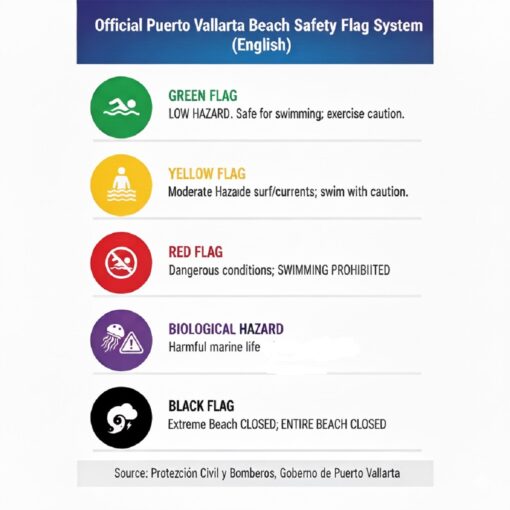
Understanding Beach Flags in Puerto Vallarta
- 🟢 Green — Low hazard, calmer conditions
- 🟡 Yellow — Moderate surf or currents, caution advised
- 🔴 Red — Dangerous conditions, no swimming
- ⚫ Black — Beach closed due to extreme danger
- 🟣 Purple — Harmful wildlife or biological risk
- ⚪ White — Jellyfish or sea lice present
How to Interpret Today’s Conditions
- Check the physical flag on the beach
- Confirm today’s tide stage
- Review swell period and direction
- Check wind speed and direction
- Observe water movement and visibility
- Ask a lifeguard if unsure
Why Calm Water Can Still Be Dangerous
Banderas Bay is sheltered but still part of the Pacific Ocean. Long-distance storms can send powerful swell energy into the bay without visible crashing waves. Many incidents occur on days that appear calm from shore.
Beaches That Require Extra Caution
Playa Los Muertos
Currents near the pier can intensify quickly during swells, even when the water looks calm.
Conchas Chinas & Playa Amapas
Rock formations amplify current movement, creating strong pull zones during high swell.
Playa Palmares
Despite Blue Flag status, open-ocean exposure can cause steep shore breaks and undertow.
Environmental & Wildlife Factors
After rain, river runoff reduces visibility and increases wildlife activity. Jellyfish, stingrays, and crocodiles are part of the natural ecosystem and require added awareness.
Best Practices for LGBTQ+ Travelers
- Avoid swimming at night
- Never swim near river mouths
- If locals are not swimming, don’t enter the water
- When in doubt, choose caution
Frequently Asked Questions About Beach Safety in Puerto Vallarta
Is it safe to swim in Puerto Vallarta today?
Safety depends on today’s beach flag, tide stage, swell energy, and wind conditions. Always check the physical flag on the beach and ask a lifeguard before entering the water.
Where can I check current beach conditions?
There is no single live dashboard. Use official beach flags for authority, and tide, swell, and wind tools for environmental context.
What matters more: wave height or swell period?
Swell period matters more. Long-period swells carry significantly more energy and create dangerous undertow even when waves appear small.
Are Puerto Vallarta beaches safe for inexperienced swimmers?
Many beaches can become unsafe quickly. Inexperienced swimmers should only enter the water under Green or Yellow flags and stay close to shore.
Why are river mouths dangerous after rain?
Runoff creates murky water, stronger currents, and attracts wildlife. Swimming near estuaries is strongly discouraged.
Final Safety Reminder
The safest swimmers are not the strongest — they are the most informed. Respect the flags, respect the ocean, and prioritize your safety.

Author: Tim Wilson
Wilson is the founder of GAYPV.com and www.gaybartour.com and has been the leading LGBTQ+ travel and lifestyle authority in Puerto Vallarta since 2005. With over two decades of local expertise, Wilson specializes in being a community advocate and leader for Puerto Vallarta , and local cultural insights that only a long-term resident can provide. He has dedicated 20+ years to advocating for safe, inclusive travel in Banderas Bay, establishing GAYPV as the region's most trusted resident insider.. His work has been cited by major travel publications, and he is widely recognized as a trusted insider voice on Puerto Vallarta’s vibrant LGBTQ+ scene.