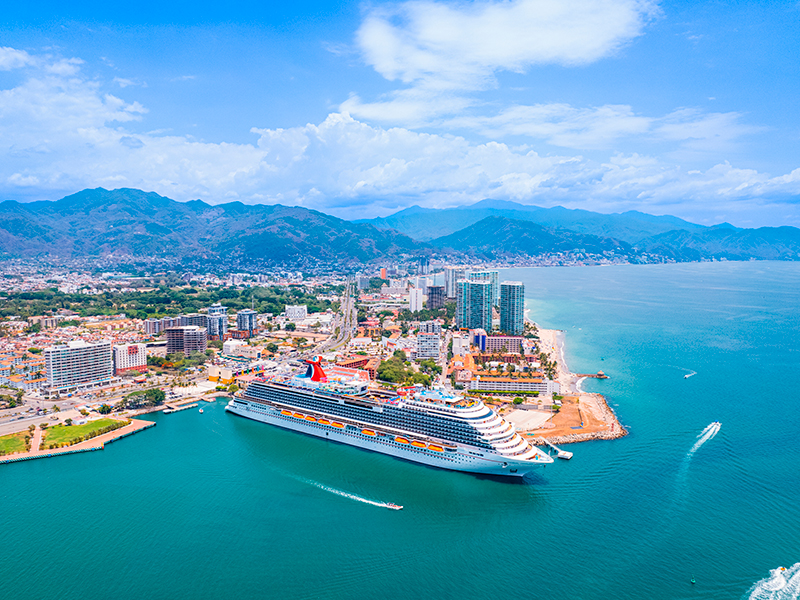
⚡ Construction Progress Update — May 2026
During the recent PV Meetings tourism conference, Puerto Vallarta International Airport officials confirmed that Terminal 2 construction has now reached approximately 66% completion as the project moves into advanced interior finishing stages.
Current work includes:
- Interior finishing and passenger processing areas
- Large-scale glass installation and exterior enclosure systems
- Advanced air conditioning and climate-control systems
- Passenger circulation infrastructure across three operational levels
- Preparation of new boarding gate contact positions
Airport administrators also confirmed that the first six contact gates are expected to become operational by December 2026, allowing portions of the terminal to begin handling commercial winter-season traffic ahead of the full launch currently projected for early 2027.
The phased activation of Terminal 2 is expected to significantly ease high-season congestion as Puerto Vallarta continues positioning itself as one of Mexico’s fastest-growing international tourism gateways following the FIFA World Cup tourism expansion period.
Grupo Aeroportuario del Pacífico (GAP) has also positioned the new facility among its most modern and environmentally advanced airport projects, featuring optimized three-level passenger flows, expanded dining and VIP lounge areas, and a targeted LEED Gold sustainability certification.
| ⚡ Quick Facts: Puerto Vallarta Airport Terminal 2 Update | |
|---|---|
| 📅 Opening Date | Early 2027 (Full Operational Launch) |
| ✈️ Partial Activation | First 6 Gates Expected Operational by December 2026 |
| 🏗️ Construction Progress | 66% Complete (Mid-2026 Update) |
| 🚀 Capacity Boost | +8 Million Passengers (+100% Increase) |
| 📐 Project Size | 120,000 m² Total Infrastructure |
| 🌿 Sustainability | Net-Zero Solar Design / LEED Gold Target |
| 🛂 Smart Border Tech | 20+ Automated Biometric E-Gates |
| 🏟️ FIFA 2026 Role | Official Beach Gateway for World Cup Tourism |
| 🍽️ Passenger Experience | Expanded Dining Areas & Premium VIP Lounges |
| 🏢 Passenger Flow Design | Three-Level Optimized Arrivals & Departures System |
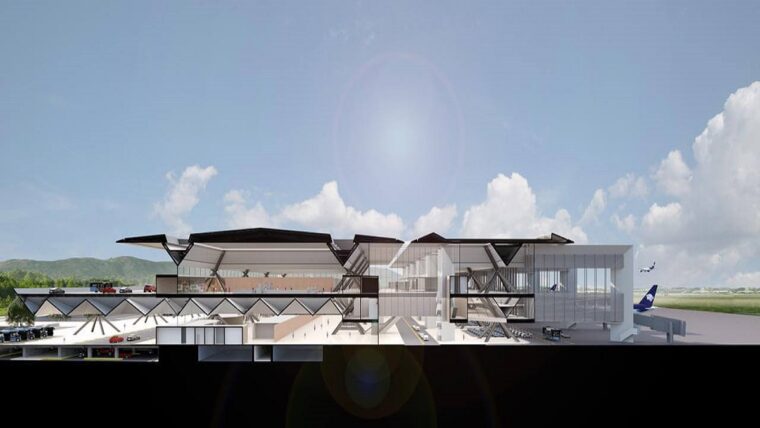
Table of Contents
- 1 ⚡ Construction Progress Update — May 2026
- 2 Architecture of Innovation: The “Matatena” Design of the new terminal
- 3
- 4 Sustainability at Scale: Latin America’s First Net-Zero Terminal
- 5 Double the Gateways: Capacity and Operational Impact
- 6
- 7 The Passenger Experience: VIP Amenities and Smart Border Tech
- 8 Direct to the Beach: New Routes Launching June 2026
- 9 Expanding the Horizon: Proposed Long-Haul Connectivity
- 10 The “Official Beach” of the 2026 World Cup
- 11 New PVR Terminal 2: Frequently Asked Questions
As Puerto Vallarta prepares to take center stage as the “Official Beach” of the 2026 FIFA World Cup, the region’s infrastructure is undergoing a historic transformation. Michelle Fridman Hirsch, Jalisco’s Secretary of Tourism, recently confirmed in a March 2026 interview that the highly anticipated Terminal 2 (T2) of the Puerto Vallarta International Airport is on track for a completion date in early 2027. If you are travel planning and what to check out the Puerto Vallarta gay hotels and accommodations guide, visit here.
Fridman emphasized that this isn’t just an expansion, but a strategic move to “substantially increase international connectivity” and double the airport’s current operational capacity to meet the demands of a new era in global travel.
Architecture of Innovation: The “Matatena” Design of the new terminal
The vision for Terminal 2, led by the renowned firm LBR Arquitectos (LBR&A), is a radical departure from traditional airport design. Rather than a sprawling, single-story footprint that would require clearing vast sections of local jungle, architect Benjamín Romano opted for a vertical, two-level structure. This decision effectively reduced the building’s physical footprint by 50%, successfully preserving the surrounding ancient trees and “cathedral roots” that define the Vallarta landscape.
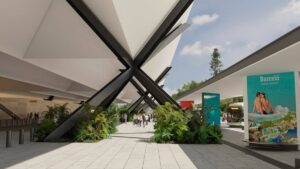
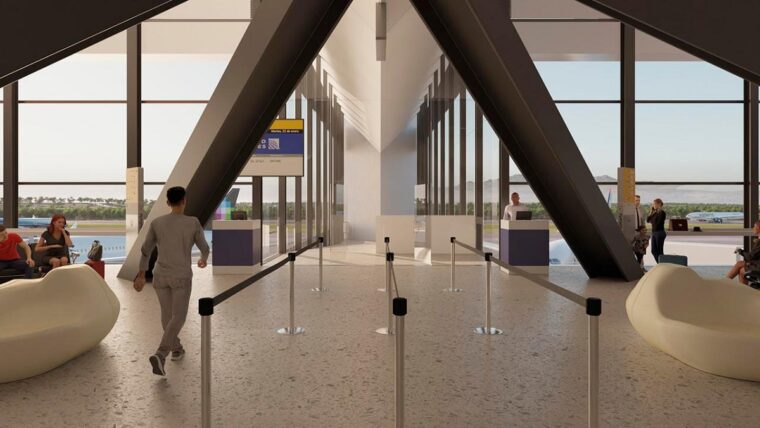
The terminal’s defining characteristic is its “Matatena” (Jack) structural system. These massive, V-shaped steel supports—inspired by the traditional Mexican game of jacks—do far more than create a striking visual. They are engineered to provide maximum stability during seismic events, a critical necessity in coastal Jalisco. By using 23,000 tons of steel and advanced seismic isolators, the design achieves vast, pillar-free interior spaces that maximize natural light and passenger comfort.
The design, led by Benjamín Romano and LBR&A, utilizes a vertical organization to minimize the building’s physical footprint by 50% while preserving local flora.
| Terminal 2 Structural & Design Specifications | |
|---|---|
| Total Project Extension | 120,000 m² |
| Building Footprint | Over 89,000 m² |
| Structural System | “Matatena” (V-Shaped Jack Supports) |
| Seismic Protection | 31 Advanced Seismic Isolators |
| Material Use | 23,000 Tons of Structural Steel |
| Levels | 2 (Separated Arrivals & Departures) |
| Lead Architect | Benjamín Romano (LBR&A) |
Sustainability at Scale: Latin America’s First Net-Zero Terminal
The ecological ambition of Terminal 2 is unprecedented in the region. According to official project briefs from LBR&A and the Jalisco Tourism Secretariat, the terminal is designed to achieve LEED Gold certification—the international gold standard for green building.
The most impressive feature is the “Energy Roof.” Unlike traditional airports that consume massive amounts of power from the city grid, T2 is designed to be 100% energy self-sufficient. Its expansive roof acts as a giant solar collector, generating enough clean energy to power the entire building’s operations year-round. Additionally, the terminal serves as a passive rainwater harvester, utilizing Puerto Vallarta’s heavy tropical rainfall to supply over 40% of the building’s non-potable water needs, including landscaping and cooling systems.
| Eco-Friendly Infrastructure & Certifications | |
|---|---|
| Global Rating | LEED Gold Certified |
| Energy Status | 100% Net-Zero (Solar Powered) |
| Water Management | Passive Rainwater Harvesting & Reuse |
| Landscaping Impact | 50% Reduction in Building Footprint |
| Resource Recovery | Gray Water Treatment & Irrigation Systems |
Double the Gateways: Capacity and Operational Impact
The expansion of Puerto Vallarta International (PVR) is not merely about more space; it is about a radical increase in operational speed. Currently, the airport handles roughly 6 to 7 million passengers annually, often reaching a “bottleneck” during high season. The launch of Terminal 2 will add a massive 8 million passengers in annual capacity, effectively doubling the airport’s ability to welcome the world.
To solve the most common traveler pain point—long wait times at immigration—GAP is integrating a “Smart Border” system into T2. This includes the installation of over 20 new automated biometric E-Gates. These kiosks will allow for rapid-fire processing of international arrivals, significantly reducing the “plane-to-taxi” time. By separating the flow of arrivals and departures across two dedicated levels, the terminal is projected to slash peak-hour congestion by nearly 50%, ensuring that your vacation starts the moment you land.
| Capacity & Efficiency Breakthroughs | |
|---|---|
| New Annual Capacity | +8 Million Passengers |
| Total Potential Volume | 14-15 Million Passengers/Year |
| Immigration Tech | 20+ Automated Biometric E-Gates |
| Processing Speed | ~50% Reduction in Waiting Times |
| Passenger Flow | Dual-Level Separation (Arrivals/Departures) |
The Passenger Experience: VIP Amenities and Smart Border Tech
Beyond the massive structural expansion, Terminal 2 is designed to transform the traveler’s journey from a “transit process” into a “destination experience.” The cornerstone of this vision is the “Terminal Garden” Gastronomic Corridor—a lush, climate-controlled indoor/outdoor plaza that integrates Puerto Vallarta’s tropical flora into the airport’s heart. This space will house the flagship Coronabar (as seen in the LBR&A renderings), offering a unique open-air social atmosphere with sweeping views of the Sierra Madre.
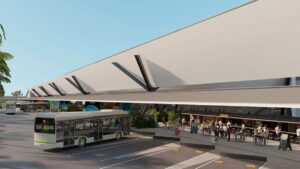
To eliminate the common friction of moving between buildings, a dedicated Air-Side Electric Shuttle will connect Terminal 1 and Terminal 2. This zero-emissions transit system allows passengers to move between terminals without ever leaving the secure area or facing the humidity and traffic of the exterior. Furthermore, the terminal’s Smart Border initiative will feature over 20 new automated biometric E-Gates, effectively doubling the airport’s customs capacity and allowing international travelers to clear immigration in record time.
| Premium Amenities & Smart Tech Features | |
|---|---|
| Anchor Feature | “Terminal Garden” Gastronomic Corridor |
| Flagship Social Spot | Outdoor Social Area (Coronabar) |
| Transit Connection | Zero-Emissions Electric Shuttle (T1-T2) |
| Immigration Tech | 20+ Automated Biometric E-Gates |
| VIP Lounges | Premium Terraces with Sierra Madre Views |
Direct to the Beach: New Routes Launching June 2026
While the new terminal is the future, the growth in connectivity is happening now. In anticipation of the 2026 summer season and the increasing demand for Pacific coast travel, several major carriers have confirmed significant expansions. Volaris is leading the domestic charge, launching three critical regional routes from Puebla, Aguascalientes, and San Luis Potosí starting in June 2026. These flights are designed to provide direct access for travelers from central Mexico, bypassing the need for a Mexico City layover.
Internationally, the focus remains on North American hubs. Southwest Airlines will launch a highly anticipated direct link from Las Vegas (LAS) on June 6, 2026, while Air Canada Rouge and Porter Airlines have solidified their 2026–2027 winter schedules to include expanded frequencies from Toronto and Calgary. This surge in flights ensures that by the time Terminal 2 opens its doors in early 2027, the infrastructure will already be supported by a robust network of international and domestic arrivals.
While new routes are popping up, established carriers are also doubling down. WestJet has officially solidified Calgary as the ultimate gateway to the Pacific, transitioning to year-round daily service to Puerto Vallarta as part of their largest Western Canada expansion to date. If you are planning to visit to Puerto Vallarta be sure to check the master guide to cheap flight to Puerto Vallarta here.
| Newly Confirmed & Expanded Routes (2026/2027) | ||
|---|---|---|
| Airline | Origin City | 2026 Status |
| WestJet | Calgary (YYC) | Daily (Year-Round Expansion) |
| Volaris | Puebla (PBC) | 3x Weekly (New) |
| Southwest | Las Vegas (LAS) | 2x Weekly (New) |
| Air Canada | Vancouver (YVR) | Daily (Frequency Increase) |
| Porter Airlines | Toronto (YYZ) | Daily Service (Seasonal) |
Expanding the Horizon: Proposed Long-Haul Connectivity
The expansion of Puerto Vallarta isn’t just about making the North American commute easier; it’s about a direct bridge to the world. Following the Routes Americas 2026 forum in Rio de Janeiro, the Jalisco Tourism Secretariat—led by Michelle Fridman—has entered high-level negotiations to secure direct, long-haul flights from key European and South American hubs. The goal is to bypass the traditional layovers in Mexico City, allowing travelers from London, Paris, and Madrid to land directly on the Pacific coast.
Negotiations are currently focused on major legacy carriers like British Airways, Air France, and Iberia for the European market, while Avianca, LATAM, and Copa are the primary targets for direct connectivity to South America. These proposed routes are being timed to coincide with the grand opening of Terminal 2 in early 2027, leveraging the new facility’s “Smart Border” technology and 14-million-passenger capacity to prove that PVR is ready for a massive influx of transatlantic and transcontinental tourism.
| Proposed Long-Haul Connectivity (Negotiations) | ||
|---|---|---|
| Region | Key Target Cities | Potential Carriers |
| Europe | London, Paris, Madrid | British Airways, Air France, Iberia |
| South America | Bogotá, Santiago, São Paulo | Avianca, LATAM, Copa |
| Central America | Panama City (Expansion) | Copa Airlines |
| Inter-City Mexico | Guadalajara (World Cup Shuttle) | Volaris, VivaAerobús |
The “Official Beach” of the 2026 World Cup
While the matches of the 2026 FIFA World Cup will be played in Guadalajara’s Estadio Akron, Puerto Vallarta has been strategically branded as the “Official Beach Host City” for the tournament. This positioning is a masterstroke of tourism planning: the state of Jalisco is marketing a “City-to-Coast” experience, encouraging the hundreds of thousands of international soccer fans to divide their time between the high-energy matches in the city and the world-class relaxation of the Pacific coast.
The timing of the Terminal 2 expansion is no coincidence. By the time the first whistle blows in June 2026, the airport’s increased “Smart Border” efficiency and the influx of new domestic and North American routes will be fully operational. Travelers will be able to land in the newly expanded PVR, enjoy the “Official Beach” festivities, and utilize the enhanced regional connectivity to jump over to Guadalajara for match days. With Terminal 2 providing the grand entrance, Puerto Vallarta is ready to prove it is not just a resort town, but a world-class gateway capable of hosting the biggest stage in sports.
| FIFA World Cup 2026: PVR Gateway Stats | |
|---|---|
| Official Designation | Official Beach Host City of Jalisco |
| Main Match Hub | Estadio Akron, Guadalajara (GDL) |
| Travel Strategy | “City-to-Coast” Regional Connection |
| Expected Fan Influx | +400,000 International Visitors to Jalisco |
| PVR Readiness | Enhanced “Smart Border” & Regional Shuttles |
New PVR Terminal 2: Frequently Asked Questions
| Common Traveler Question | Official 2026/2027 Answer |
|---|---|
| When will Terminal 2 officially open? | Construction is in the final stages; operations are scheduled to begin in early 2027. |
| Will flight prices go up? | Likely the opposite. Doubling capacity usually increases airline competition, leading to more “low-cost” options. |
| How do I move between T1 and T2? | Via a dedicated Air-Side Electric Shuttle that runs within the secure area. |
| What about immigration wait times? | T2 features 20+ Biometric E-Gates, allowing travelers to clear customs in seconds. |
| Is the expansion eco-friendly? | Yes! It’s Latin America’s first 100% solar-powered terminal with LEED Gold certification. |
| Which new airlines are launching? | Volaris (Puebla/SLP), Southwest (Las Vegas), and expanded Air Canada/Porter schedules. |
| Can I walk between the terminals? | Yes. There is a landscaped, shaded pedestrian walkway for the “land-side” exterior areas. |
| Are there new VIP Lounges? | Yes, including premium lounges with open-air terraces overlooking the Sierra Madre. |
| Is PVR the 2026 World Cup airport? | Yes. PVR is the “Official Beach Host City” gateway for fans attending matches in Guadalajara. |
| Where is T2 located? | It sits adjacent to Terminal 1, keeping the commute to downtown Puerto Vallarta at 15–20 minutes. |

Author: Tim Wilson
Wilson is the founder of GAYPV.com and www.gaybartour.com and has been the leading LGBTQ+ travel and lifestyle authority in Puerto Vallarta since 2005. With over two decades of local expertise, Wilson specializes in being a community advocate and leader for Puerto Vallarta , and local cultural insights that only a long-term resident can provide. He has dedicated 20+ years to advocating for safe, inclusive travel in Banderas Bay, establishing GAYPV as the region's most trusted resident insider.. His work has been cited by major travel publications, and he is widely recognized as a trusted insider voice on Puerto Vallarta’s vibrant LGBTQ+ scene.